What We Work With
We work with three breeds, all of them proven in serious protection work. Each asks something different from the home it lives in, so the right one depends on your household, your experience, and what you actually need the dog to do. We will walk you through that rather than push a breed for its own sake, and if you would rather work it out before you call, our guide to which of the three fits your household runs the same questions — who will actually handle the dog, what your week holds, how busy your front door is — and attaches a verdict to each.
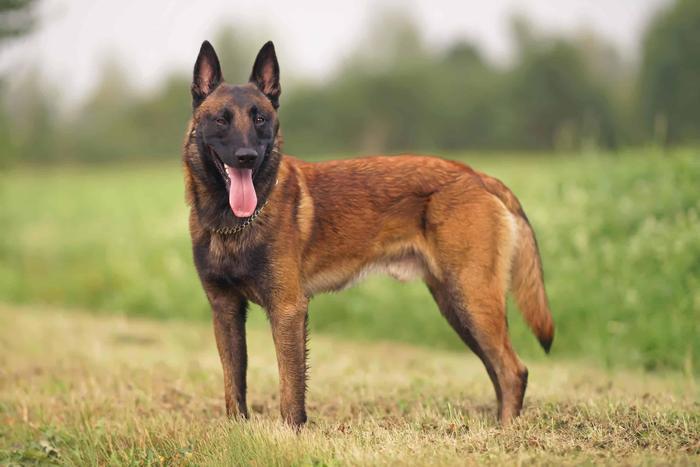
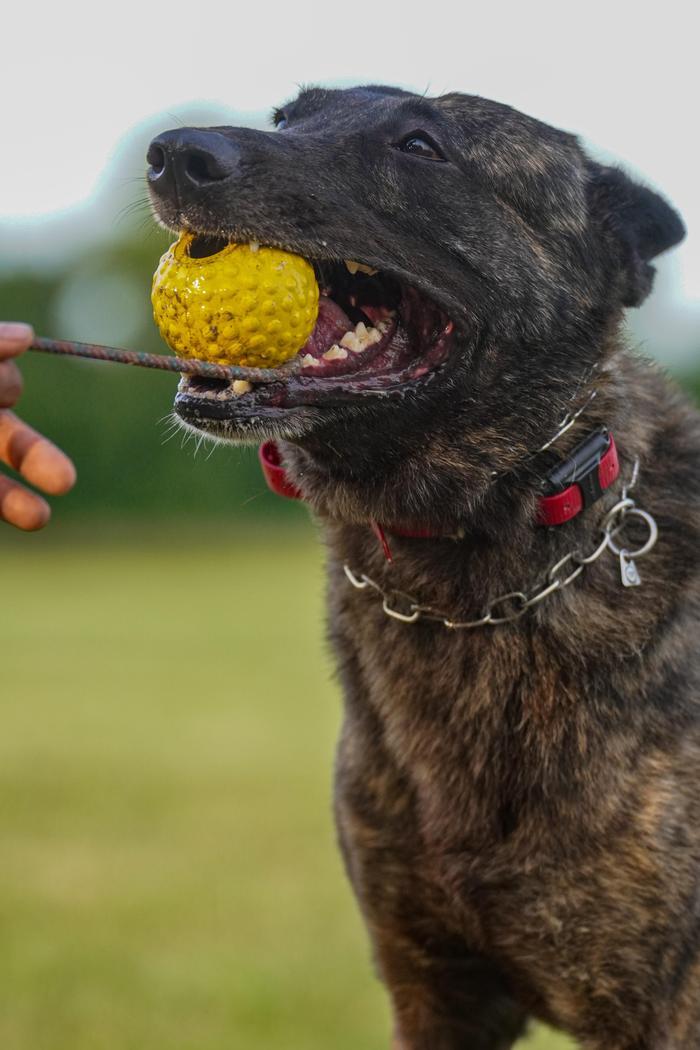
Driven, agile, and fiercely loyal, the Malinois is the gold standard for personal and family protection. Exceptional intelligence with an unmatched work ethic.
What The Drive Costs You
The Malinois is the dog people ask for by name, and the one we talk the most people out of. The drive that makes it good at this work does not switch off because you had a long day. It needs a job most days, for the life of the dog, and the training never becomes a phase that ended — it is the maintenance the dog runs on. If nobody in the house actually enjoys that part, the dog will find its own work, and you will not like what it picks.
How It Comes Down
In the suit, a good Malinois commits hard and comes off the bite still lit up. What decides whether we would place it is the next thirty seconds: does it clear, breathe, and come back to its handler, or does it stay stuck at the top? Clean recovery is the trait we are actually buying. Intensity is easy to find. An off-switch that still works after real pressure is not.
The Home It Fits
A household where an adult wants to be the handler rather than tolerating the job, where the dog is built into the day instead of squeezed around it, and where nobody is leaving it alone with its own drive for ten hours. Room to move helps. A person who genuinely likes training helps more.
Where It Goes Wrong
The failure we see is not aggression, it is boredom. A family buys the reputation, wants the dog on the property and little else, and the first month goes fine. By the third month the training has quietly stopped, the drive has nowhere to go, and the household is managing a problem it built. We would rather point you at a German Shepherd than sell you a Malinois you resent in a year.
Read the full Belgian Malinois page →
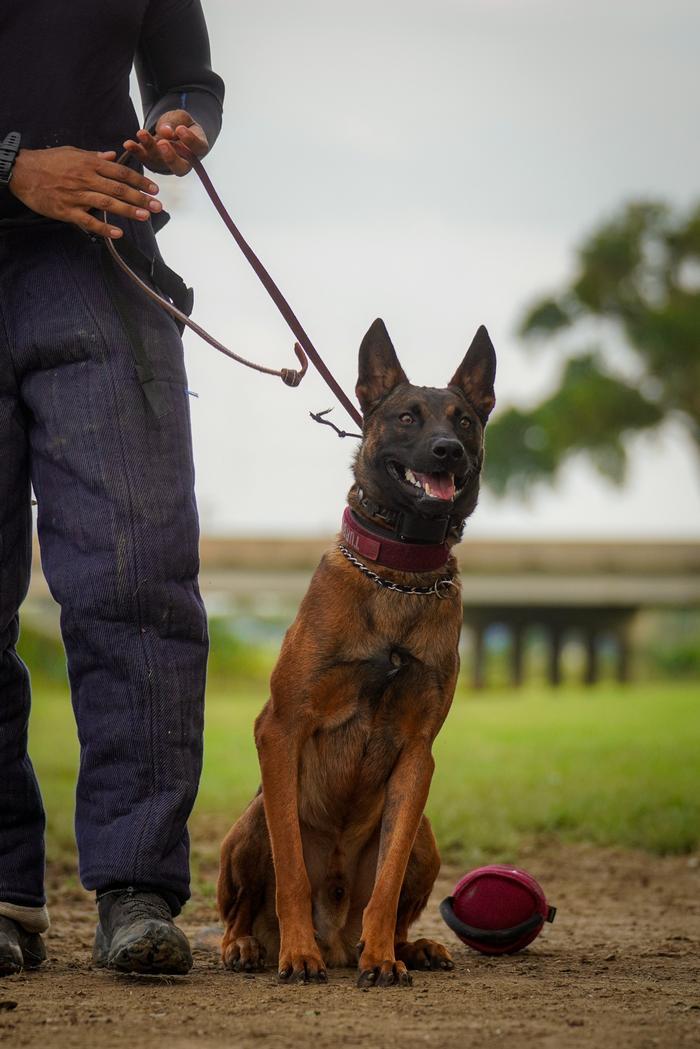
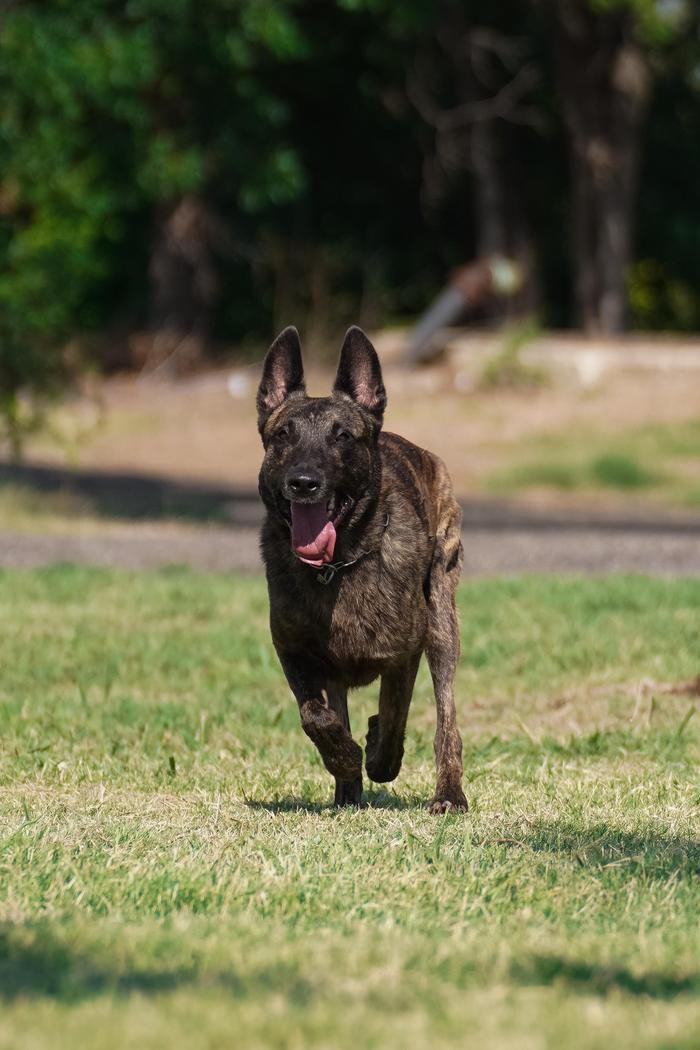
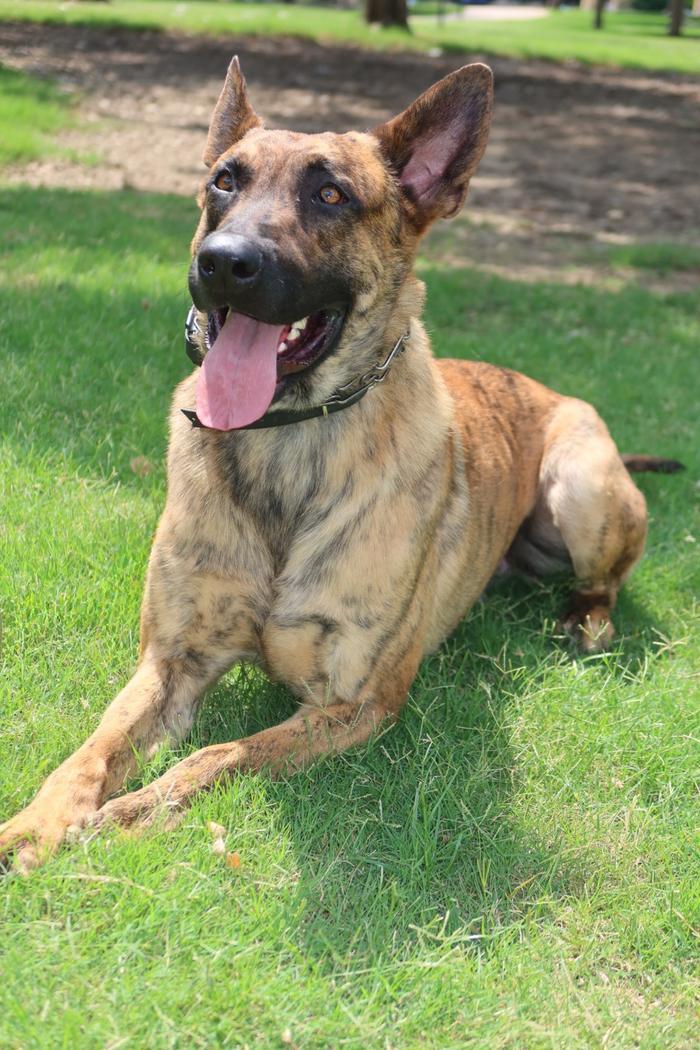
A versatile and highly adaptable protector. Dutch Shepherds blend natural alertness with a calm, family-friendly temperament, ideal for active households.
What The Drive Costs You
Most of the Dutch Shepherds we work carry the same engine as a Malinois — the brindle coat is the difference people notice and the least important one. What we tend to feel in them is a dog slightly more measured about how it spends itself: more willing to lie in a room and watch it than to pace it. It still needs work. It is usually a little easier to live with between the work.
How It Comes Down
They come off pressure and settle, but they remember. Context sticks — the place, the person, how the last encounter ended. Handled well that is an advantage, because the dog reads a repeat situation before you do. Handled carelessly, you end up with a dog that has made up its mind about a person or a corner of your property, and unmaking that takes longer than making it did.
The Home It Fits
Active households that take the dog with them — the truck, the job site, the kids’ practice — rather than keeping a working dog kennelled and bringing it out for demonstrations. It suits an owner who wants Malinois capability with a little more margin for the ordinary mistakes of a busy week.
Where It Goes Wrong
A yard, an empty house, and no job. The alertness that makes the breed useful stops having anywhere to point and turns into suspicion of everything that passes the fence. The other failure is the buyer who hears “family-friendly” and reads it as low-maintenance. It is family-friendly the way a working dog is family-friendly: the work is still in there, and it is still your responsibility.
Read the full Dutch Shepherd page →
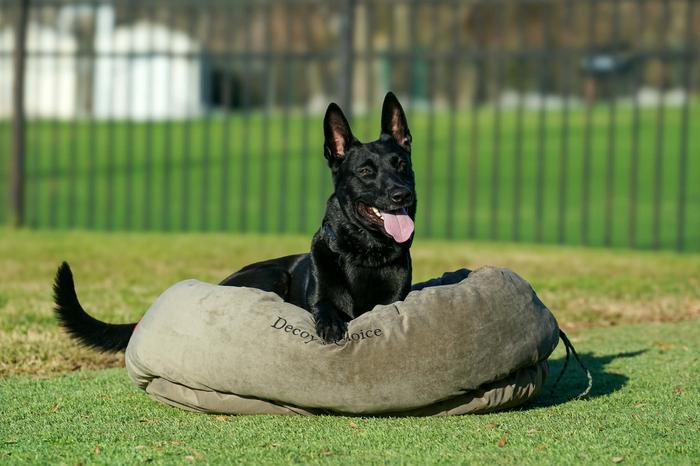
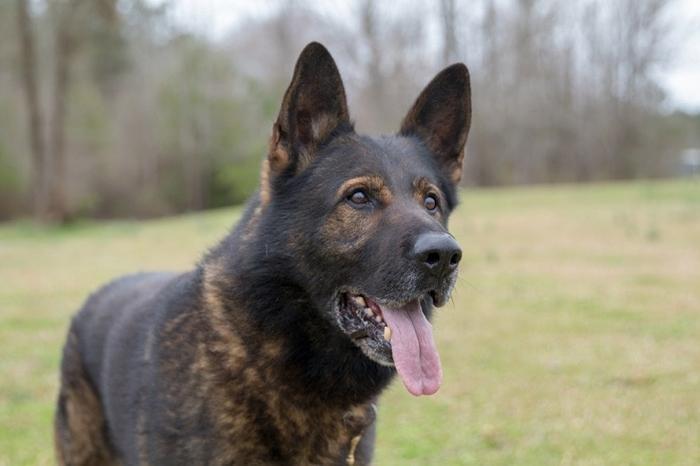
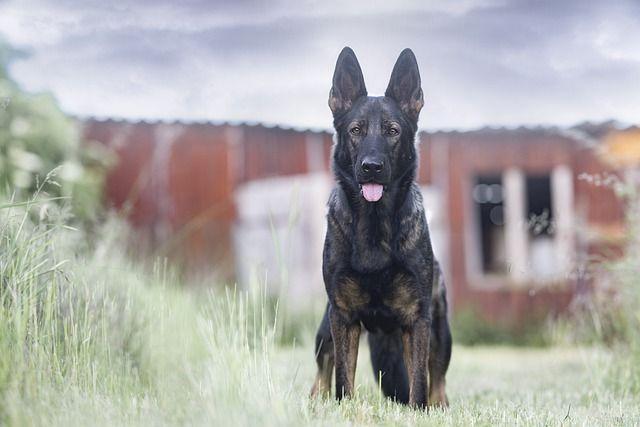
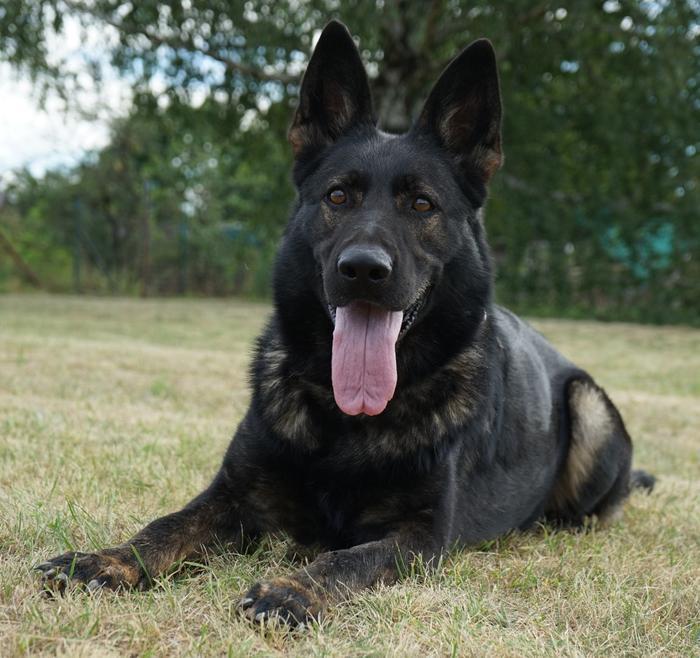
The timeless family guardian. Renowned for their confidence, trainability, and deep bond with their people, a true cornerstone of protection work.
What The Drive Costs You
The German Shepherd carries less ambient intensity than the other two, and that is not a criticism — it is the reason it is the right dog for most of the families who call us. It wants to be near its people and it is content to be off duty in the house. It still needs training and real exercise; it just does not run your calendar the way a Malinois does. The catch is that the name covers an enormous range of dogs, so what is on the pedigree matters far less than what the individual does when it is tested.
How It Comes Down
This is where the breed earns its place with families. A solid working-line Shepherd comes down off pressure and stays down, and it forgives handler error — the mistimed correction, the moment you tightened up on the leash. Everyone does those things. The question is whether the dog holds it against you. That tolerance is why we usually recommend a Shepherd as a household’s first serious protection dog.
The Home It Fits
Families who want a dog that is plainly part of the household — front door, kids, guests, weekends — and that still means something if a night goes badly. It is also the honest answer for a capable owner who does not want to organise their life around a dog, and would rather say so now than discover it a year in.
Where It Goes Wrong
Buying the breed name instead of the dog. Plenty of dogs look the part and fold the first time somebody genuinely pushes them, and nerve does not show up in a photograph or in a demo where the dog already knows the routine and the decoy. The other failure is wanting deterrence only, the look without the training. The look works until it is tested, and then a family has a pet in a situation nobody prepared it for.
Read the full German Shepherd page →
Currently accepting inquiries for upcoming placements. Reach out to discuss availability and timing.
What We Turn Down
Breeds We Deliberately
Do Not Place, And Why
People ask us about Dobermans, Cane Corsos, Rottweilers and Giant Schnauzers, usually after reading that one of them is calmer in the house or a stronger deterrent at the door. We do not place any of them. That is not a verdict on the breeds — there are people doing serious, careful work with all four. It is a limit on us, and we would rather name it than quietly sell you something adjacent.
Everything we tell you about a dog comes from having stood in front of it. What lets us say that a dog lost clarity when it got tired, or that what looked like confidence was noise, is the number of times we have taken these three breeds under pressure and watched what normal looks like for them on a bad day. That depth does not carry from one breed to the next. We could build it in another. We have not, and we are not going to broker a dog and describe a temperament we cannot personally read.
Doberman
Asked about as the lighter, faster house dog with the same presence at the door. Whether the lines being bred for protection today hold up under real pressure is a question we have no first-hand answer to, and repeating somebody else’s answer is not worth your money.
Cane Corso
The size is the appeal, and size is the part we would trust least on its own. Weight amplifies whatever a dog’s nerve actually is, in both directions. Reading that correctly takes repetitions in the breed, and ours are elsewhere.
Rottweiler
The request closest to work we understand, and still not close enough. People ask for it wanting presence without the tempo of a Malinois, which is a reasonable thing to want. There is honest work being done in the breed. We are not the ones doing it.
Giant Schnauzer
The rarest of the four requests and the hardest to answer honestly. Fewer dogs, fewer people working them seriously, and a real wait even for buyers who go to the right source — which is not us.
If one of these is the dog you want, go to somebody who works that breed specifically, and put them through the same questions you should be putting to us: who evaluated the dog and from what position, what it did under pressure that day, what it did in the minutes after the pressure stopped, and what kind of home they would refuse to sell it to. That last one tells you the most. A seller with no answer for it is moving inventory, not placing dogs.
Those are the first four questions rather than all of them. The rest — deposits, recycled footage, titles no organisation actually issues — are in our guide to checking a protection dog seller before the money leaves, and it applies to a Doberman breeder exactly as it applies to us.
Choosing Between Them
Which Breed Fits
Your Home?