German Shepherd
Protection Dogs
The breed almost everyone pictures when they say protection dog, and the one the buying public understands least. Two dogs can share the name, the registry and the price bracket, and be nothing alike the first time somebody means it.
One Name For Two
Different Dogs
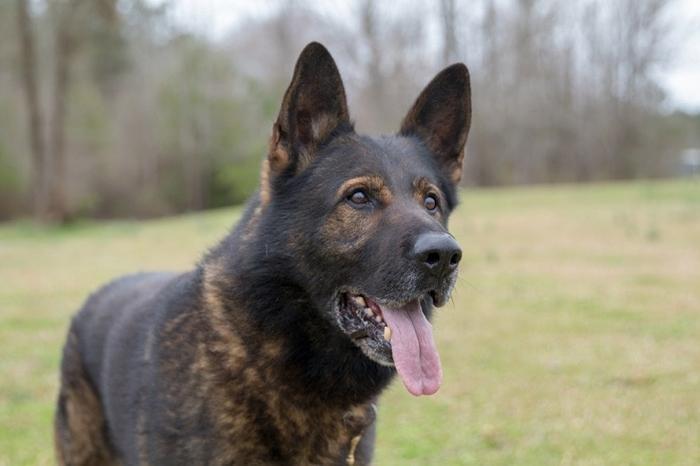
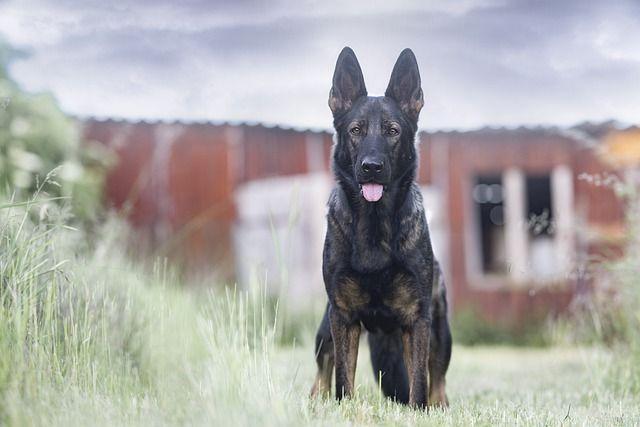
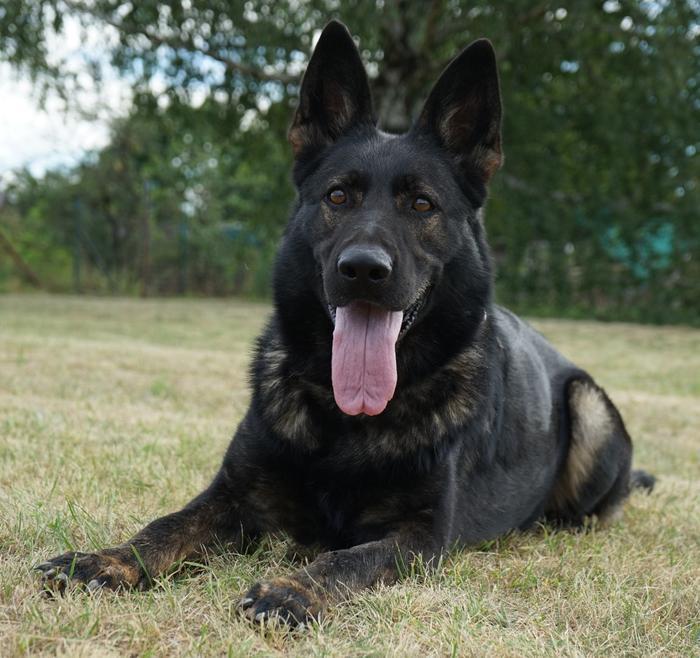
Ask anyone to picture a protection dog and most of them picture this one. That familiarity is the problem. For decades the name has covered at least two populations of dog, bred toward goals that have almost nothing to do with each other, sold to the public under one word and one reputation. A buyer who does not know the split exists will put two dogs side by side, compare the price, the colour and the paperwork, and never once compare the thing he is actually paying for.
One population is bred to be judged standing still and moving in a ring. The selection pressure is structure, gait, coat and type — how closely a dog matches a written picture of the breed, assessed by an eye at ringside. The other is bred from dogs selected on what they did: in trials, in service, on a field with a decoy in front of them. There the selection pressure is drive, nerve, grip, clarity, and whether the dog keeps working once the work stops being fun. Both are German Shepherds. Only one of them has been bred, generation on generation, on evidence of the trait you are trying to buy.
Say plainly what that means for an individual dog, because the honest version is not a slogan. Show breeding is not a moral failure, there are sound and stable dogs in show lines, and we are not going to pretend otherwise. But breeding selects for what is measured, and a ring measures a silhouette. Select on a silhouette for long enough and you get rear assemblies built for a long flowing trot rather than for what a protection dog actually does with its body, which is stop hard, turn, absorb a grown man arriving at speed, and do it again ten minutes later. You also get nerve that nobody has ever tested, because nothing in a ring tests it. Nerve does not fade because it is bad. It fades because it is not being selected for.
You will also meet line labels — West German working, DDR or East German, Czech on the working side, high lines and American show lines on the other. They are real distinctions with real histories, and they have also become sales vocabulary. A pedigree crowded with famous kennel names tells you what a dog’s ancestors were. It tells you nothing about the animal standing in front of you, and paperwork that reads like a working dog’s résumé sitting behind a dog that loses interest the first time the pressure is real is not a rare thing in this market.
Here is how to cut through all of it without learning to read a pedigree. Ask what the dog’s parents did, not what they are. A working title is a checkable event — IGP, KNPV, PSA, French Ring, or genuine service work — with a judge, a date and a published result behind it, which means somebody put that dog under pressure in front of witnesses. A show championship is also checkable, and it certifies something else entirely. Then ask the seller which of the two he is selling you, and listen for whether the answer goes vague. Vagueness at exactly that question is the most useful thing you will learn on the whole call.
It costs us to write this down. The German Shepherd is the breed families ask for by name, and a working-line dog good enough to place in a family home is a great deal harder to find than the breed’s reputation implies. The easy alternative is to sell the name, which is most of what this market does, and it is why so many families end up owning a dog that looks exactly right and has never in its life been asked a serious question.
Asking what the parents did only helps if you can read the answer, and the answer comes back as acronyms. We took them apart one at a time in what a sport title certifies and what it does not, out of the rulebooks rather than off a sales page.
None of this contradicts the short version we give elsewhere — what sits on a pedigree matters far less than what the individual dog does when it is tested. This is why that is true, and what created the gap in the first place. If you want the three breeds side by side rather than one at a time, that comparison lives on our breeds page.
Commitment, Grip,
And What Happens After
Everything below is written from the receiving end. In the suit a dog tells you things in the first second that are invisible from ten yards away behind a camera. You feel where its weight is. You feel whether it is pushing into you or hanging off you. You feel the moment it decides — and, more often than people expect, the moment it half-decides and arrives anyway, which is a different dog wearing the same body.
Commitment is the distance between the decision and the contact, and whether anything changes across it. A committed dog picks its target and does not renegotiate on the way in. An uncommitted one shortens in the last stride, arrives high or shallow, or arrives properly and then spends the next few seconds looking for permission to leave. From the outside both of those are a bite. From inside they feel nothing alike, and that gap is the entire reason we evaluate dogs in person rather than off somebody’s video.
Grip is the next thing, and it is more diagnostic than most buyers realise. A full, calm, deep grip is a dog that is comfortable where it is. A shallow grip, or one that keeps re-adjusting, is usually not a jaw problem at all — it is a dog in conflict, telling you it would rather be elsewhere before it has admitted that to itself. A good German Shepherd in the suit is typically less frantic about all of this than a Malinois. It arrives with weight and settles into the grip instead of vibrating on top of it. That calm is worth real money. It is also easy to confuse with a dog that is simply not putting much in, and the two get sold as the same thing.
Then we make it harder, because none of the above survives contact with an actual problem. Pressure is not violence; it is uncertainty applied deliberately. Noise. Movement into the dog instead of away from it. Bad footing, a tight space, a dark building, a person who does not behave the way a training field behaves. What we are reading is whether the dog keeps thinking while its adrenaline is up. Nerve is not the absence of a reaction — every good dog reacts. Nerve is what happens in the second afterwards: whether the dog comes back and investigates, or whether the thinking stops and something older takes the wheel.
And then we stop, and the part almost nobody writes about begins.
Recovery is what a dog does when the pressure ends: how long it takes to come off the top, what shape the return takes, and whether the animal you get back is the one you had ten minutes ago. It is the least photogenic thing in an evaluation and the single trait that decides whether a dog belongs in a house with your children in it. A demonstration is a picture of the loudest thirty seconds of a dog’s day. Your family lives in the other twenty-three hours.
It Never Comes Down
The dog outs, but it does not switch off. Still scanning, still loaded, panting in a way that has nothing to do with the weather, putting the leftover energy into the leash or the equipment because it has to go somewhere. It will not take food. It cannot hold a down. An hour later it is still pacing the fence line. In the right professional hands that dog can do real work. It has no business being a family dog, and obedience layered on top does not change what its nervous system is doing underneath.
It Comes Down, But It Files It Away
Baseline returns, but the dog has reached a conclusion — about the person, about the corner of the property, about the sound the gate made. Next time it arrives at that spot already decided. With a competent handler, that memory is an asset. In a family home, where the same door and the same delivery route repeat every single day, it quietly narrows the dog’s world until the household is managing a list of exceptions that nobody ever wrote down.
It Shuts Down Instead
The most misread of the three, because it looks like composure. The dog goes quiet, flat and slightly absent. It is not recovering, it is withdrawing, and it will hand the same stress back later in a shape you were not watching for. If a dog is suddenly serene straight after real pressure, check whether it will still eat and still work. A dog that will not take food is not relaxed.
What Good Actually Looks Like
Out on the first command. Back to the handler under its own steam. A breath, and usually a full-body shake — that shake is not a quirk, it is a dog dumping stress, and we watch for it. Food inside a minute. Obedience inside two, and thinking rather than mechanical. Then, that evening, flat out on the floor in a room full of people. None of it is impressive to watch. All of it is the whole ballgame.
Two things worth being blunt about. Recovery is trainable at the margins and not at the centre: a good programme can teach a clean release and build the habit of returning to the handler, and it cannot install a different nervous system. And this is testable by you, on the day, knowing nothing about dogs.
So do not watch the bite. Watch the twenty minutes after it. Ask for plain obedience immediately after the protection work — a heel, a down, a recall — and see whether the dog can still hear. Ask to see it indoors. Ask what it is like an hour later. Anyone proud of a dog will be pleased you asked. Anyone who steers you back to the bite is selling you the thirty seconds.
Where It Belongs,
And Where It Goes Wrong
Where It Fits: An Ordinary Front Door
A house with a normal amount of chaos in it — kids, their friends, a grandparent, a contractor in the kitchen, people in and out all Saturday. This is the breed’s genuine advantage and it is not a small one. It is socially generous enough to let a household run at its own speed, and still a serious dog on the night that stops being ordinary.
Where It Fits: More Than One Handler
Because the breed tolerates handler error, it also tolerates being handled by more than one adult. A spouse who is not the primary trainer can take the dog out and be listened to, provided the rules are the same in both sets of hands. That is much harder to pull off with a sharper dog, and it is a large part of why we point most first-time families here.
Where It Goes Wrong: Bought As A Symbol
The failure is almost never aggression. It is a family who bought the idea of the breed — the one from the film, the childhood dog, the picture in their head — and expected a piece of furniture that also happens to be dangerous. What arrives is a working animal with needs and opinions. Within a few months the training has quietly stopped and the household has decided the dog has a problem. It does not. It has a job description nobody read.
Where It Goes Wrong: “Calmer Than A Malinois”
True, and routinely misheard as calm. A working-line German Shepherd is a large, athletic, thinking animal that needs its body and its head used most days. If the plan is a walk when the weather is nice, you get a bored dog with enormous physical capability and nothing pointed at it — a slower version of the same failure. Do not buy this breed because it is the low-effort one. It is the lower-effort one, and there is a great deal of room inside that word.
We will go one step further, because it is the honest end of the same thought. If what you actually want is presence at the door and nothing else — if nobody in the house intends to train, and the dog’s real job is to look like it might — do not buy a trained protection dog at all. You would be buying the most expensive version of something a fence, lighting and a camera do better, and none of those ever bite anybody’s nephew. Buy a well-bred pet from someone who breeds for temperament, and enjoy it. That answer costs us a sale every time we give it, and it is the right answer more often than this market admits. The longer form of the argument, including the difference between a guard dog and a protection dog, is on our FAQ.
When Another Breed
Is The Better Answer
We place three breeds and we would rather match the dog to the household than defend a preference, so here is the comparison written the way we would give it on the phone — including the parts where we would point you away from this page.
Against The Belgian Malinois
Tempo, mostly. The Malinois runs at a higher idle and does not lower it because your week got difficult. Its ceiling is higher too: at the top end a good one is faster, harder and more relentless than nearly anything else you could put in a house. What you pay for that ceiling is a dog needing a job most days for the rest of its life. The German Shepherd trades some of the ceiling for a floor you can actually live on. If somebody in your house genuinely wants to be a dog trainer, take the Malinois. If nobody does, do not.
Against The Dutch Shepherd
Closer than most buyers expect, because plenty of Dutch Shepherds carry the same engine as a Malinois with a little more measure about how they spend it. The real difference to a family is forgiveness. Dutch Shepherds remember — the place, the person, how the last encounter ended — which is an asset in a handler’s hands and a liability in a distracted household. The German Shepherd forgives the mistimed correction and the bad Tuesday far more readily. If your life is one the dog comes along for, the truck and the job site and the field, the Dutch Shepherd may well be the better dog. If your life is mostly a busy house, ours is the Shepherd.
Two practical points that get left out of comparisons like this. Coat is one: a heavier coat is real work in a North Texas summer and real work on your floors, and the short-coated breeds simply handle heat better. Size is the other. Buyers ask for the biggest dog in the litter as though weight were the same thing as capability. It is not. Weight amplifies whatever nerve a dog already has, in both directions, and it shortens the working life of a dog whose joints were never going to hold up anyway. A sound, moderate, hard-thinking dog beats a large one, and it is not close.
A third point gets left out more often than either. Of the three, the German Shepherd is the likeliest to appear by name on a carrier’s list of restricted breeds — and the exclusion that actually catches buyers is not about breed at all, but about what the dog was trained to do. Read how a homeowners policy treats a trained dog before you decide the answer is to shop for a less familiar breed.
Read the same four questions answered for the other two before you decide — the Belgian Malinois and the Dutch Shepherd each ask something different of a house. If it is your household rather than the breeds you want ranked, the household-by-household verdict on all three does that directly, from a first-time handler to a front door nobody manages. And there is a fourth answer we give more often than any of the three breeds: not yet, or not this. Sometimes the household is right and the timing is not — a move, a new baby, a year that is already full. We would rather have that conversation than deliver a dog into it. How a placement actually runs is laid out on our programs page.
What We Look For,
And What Makes Us Pass
The order matters as much as the list, and ours is probably backwards from what you would expect. Bite work comes late. If a dog cannot do the earlier things, what it does on a suit is irrelevant, because it will never be in a position to use it.
- Neutrality first: how the dog is around people who are simply present and doing nothing
- Environmental soundness — slick floors, stairs, grating, tight spaces, a dark building
- Startle and return: not whether the dog reacts, but whether it comes back and investigates
- Focus on the handler that survives distraction, and an out that works on the first command
- Commitment, grip and clarity in the suit, read from our position rather than the fence line
- Obedience immediately after protection work, at the moment the dog would rather not
- Recovery: what the dog is like ten minutes later, an hour later, and that same evening
- The dog on a down in a busy place with nothing happening at all
Redirection
A dog that puts its frustration onto the leash, the equipment or the handler when it cannot reach what it wants. This is not a training gap we intend to manage inside somebody’s living room. It is a pass, immediately, however good the rest of the dog is.
It Has To Be Wound Up
Some dogs cannot find their confidence unless the decoy builds it for them — the movement, the noise, the familiar routine. Take the routine away and the dog is not there. That animal is honest on its home field and useless in a hallway at two in the morning, which is the only situation anyone is actually buying for.
A Second And Third Command
An out that needs repeating is not a partly finished out. It is a dog that has decided the first command is negotiable. In a family home the off-switch is the product; if it requires a discussion, there is nothing here to place.
Avoidance Dressed As Control
The dog that is very still, very quiet and technically doing nothing wrong, while it is in fact looking for a way out. It photographs beautifully and buyers fall in love with it. It fails on the one day that matters, and the family finds out in the worst possible way.
Anything At All Around Children
Not a bite, not a warning — any hesitation, any avoidance, anything we do not like while kids are moving unpredictably. There is no remediation conversation available here. We are fathers ourselves, and the standard is the one we apply in our own houses.
A Good Dog, Wrong House
The pass that is not about the dog. Plenty we turn down for one family would be excellent in another, and some of the dogs we like most are ones we would not send into the particular household on the phone. Saying so is the job. Placing the dog anyway is inventory management.
None of that is a boast about how selective we are. It is the arithmetic of doing this honestly: most dogs are never going to be family protection dogs, most families do not need one, and both of those sentences cost us money every time we say them out loud. If you want to know who is making these calls and from what position, our about page sets out our background, including our work as listed decoys at PSA-sanctioned trials — the part that puts us on the receiving end of every dog we evaluate instead of behind a camera. What a finished dog arrives already able to do is covered on the fully trained page.
Is A German Shepherd
The Right Dog For You?
Tell us about your household and we will answer honestly, including when the answer is a different breed, a different time, or no dog at all.