Belgian Malinois History And The Facts That Hold Up
A herding dog from the farms around Mechelen, organised by a veterinary professor in 1891, whose descendants were later named in reports of the 2011 bin Laden raid and the 2019 al-Baghdadi raid. Here is how that happened, with every date checked against the kennel clubs and agencies that recorded it — and what any of it means if one is going to live in your house.
Where Does The Belgian Malinois Come From?
The Belgian Malinois is the short-coated, fawn variety of the Belgian Shepherd, a herding dog from the Mechelen region of Belgium — Malines in French, which is where the name comes from. The breed was organised from 1891, when the Belgian Shepherd Dog Club was founded in Brussels and Professor Adolphe Reul of the Cureghem veterinary school gathered 117 local herding dogs to pick the best of them. It was bred for sheep work. Today the AKC calls it one of the breeds most commonly selected by police departments, and credits its compact size and speed for its value in national security work. The FCI, the international federation based in Belgium, classes it as one of four varieties of a single breed; the American Kennel Club has registered it as a separate breed since 1959.
Each of those points is linked to where we read it. What follows is the longer version: the argument the Belgians had about coats and never about work, how the breed’s numbers fell in America, the three dogs whose names made the news, and what that history tells you about the dog itself.
Belgian Malinois Facts, Each With Its Source
How To Say It
Mal-in-wa. The s is silent, as it would be in French. Source: AKC
What The Name Means
Of Malines — the French name for Mechelen, the Belgian city whose district the short-coated fawn dogs came from. Source: AKC
Size Under The Breed Standard
Ideal height 62 cm (about 24.4 in) for males and 58 cm (about 22.8 in) for females, allowed 2 cm under or 4 cm over. Males about 25–30 kg (55–66 lb), females about 20–25 kg (44–55 lb). Source: FCI standard
Colour
Under the FCI standard: only fawn with black overlay and a black mask. The AKC lists fawn and mahogany as its standard colours. Source: FCI standard
Breed Or Variety?
Both, depending on the registry. The FCI treats the Malinois as one of four varieties of a single Belgian Shepherd breed. The AKC has registered it as a separate breed since 1959. Source: AKC
What It Was Built For
Herding. The FCI standard opens its utilisation line with “originally a sheep dog” before it gets to guarding, defence and tracking. Source: FCI standard
Belgium’s Farm Dogs In The Late 1800s
The official account of the breed starts with a mess. The FCI standard’s own history describes Belgium at the end of the 1800s as full of herding dogs whose type was varied and whose coats were “extremely dissimilar”. There was no Belgian Shepherd yet, and by the same account the first detailed standard did not come until 1892.
Those farms were small. The AKC’s history of the breed describes the Malinois as developed by Belgian farmers from local shepherd dogs, and a fancier quoted there puts the farms at one to 20 acres with a few cows. We read that to mean a dog that lived and worked close to the people who kept it, but that is our inference: no source we found documents how the farm dogs were actually kept.
The short coat was regional too. The American Belgian Malinois Club puts it plainly: the short-haired fawn Malinois came from the Malines region, and the other coat types from other places around Brussels.
Professor Reul, The Club, And 117 Dogs
The person the breed standard itself calls the real pioneer and founder of the breed was a veterinarian. A group of dog fanciers who wanted to rationalise the state of Belgian herding dogs went to Professor Adolphe Reul of the Cureghem Veterinary Medical School, and the dates from there are precise. According to the FCI standard’s historical summary:
- 29 September 1891. The Belgian Shepherd Dog Club — the Club du Chien de Berger Belge — is founded in Brussels.
- 15 November 1891. Reul gathers 117 dogs at Cureghem, takes stock of them and chooses the best specimens.
- The years after. A real selection programme begins, with very close interbreeding on a few stud dogs.
- 3 April 1892. The club has a first detailed standard: one breed, three coat varieties.
- 1901. The first Belgian Shepherds are entered in the Royal Saint-Hubert Society’s stud book, the L.O.S.H. The delay, the standard says, was status: the dog belonged to ordinary people.
- By 1910. Type and temperament are considered established.
Two things in that timeline are worth a trainer’s attention. The first is the close interbreeding on a handful of studs, which the FCI summary records. In our reading, that means today’s Malinois descends from a narrow foundation; the summary does not say what the founders were selecting for beyond “the best specimens”.
The second is a sentence in the standard that we think explains the whole breed. The Belgians fought for decades over which coats and colours to accept — the summary describes “many heated discussions”. But on morphology, temperament and suitability for work, it says, there “has never caused any disagreement”. The arguments were about the outside of the dog; by the FCI summary’s account, its suitability for work was never in dispute.
The Four Belgian Shepherd Varieties And Where The Names Come From
The FCI standard divides one breed into four varieties by coat alone: length, direction, appearance and colour. Each is judged separately at shows. The place names come from the AKC’s guide to the Belgian breeds and the coat definitions from the FCI standard.
Groenendael
Long coat, uniform black and nothing else. Named for Groenendael, where it was bred. The AKC registers it as the Belgian Sheepdog.
Tervueren
Long coat in fawn or grey with black overlay and a black mask; the standard still prefers the fawn. Named for the town of Tervuren. The AKC spells it Tervuren.
Malinois
The short coat: very short on the head and legs, fuller around the neck and on the tail, which is shaped like an ear of corn and never a plume. Fawn with black overlay and a black mask.
Laekenois
The rough coat, about 6 cm of harsh, tousled hair, fawn with traces of black on the muzzle and tail. Named for Laeken, northwest of Brussels, and the last of the four the AKC recognised.
The wall between them. The standard forbids matings between varieties except in exceptional circumstances, when the official breed councils lift the ban — a rule it dates to a 1974 text drawn up in Paris. So although the four share a body, a temperament and a history, under the FCI they have been bred apart for decades, and a coat is not something a breeder is free to mix and match.
Brindle is a fault in the Malinois. The FCI standard lists brindle as a fault in the Malinois and the Tervueren, and says the black overlay must be “flamed”, never in patches or real stripes. A strongly brindle dog sits outside the Malinois colour description and may be a Dutch Shepherd or a cross. If the colour surprises you, ask to see the pedigree.
Recognition under the FCI. The FCI’s own record for the breed gives its definitive recognition as 1 January 1956, lists all four varieties, and marks the breed as subject to a working trial — the registry classifies it as a breed that has to pass one, not only a show breed.
When Did The AKC Recognize The Belgian Malinois?
The Malinois reached the United States early, but numbers declined after the Second World War stopped imports, and the breed stayed small until interest grew again. The American Belgian Malinois Club records two Malinois and two Groenendael imported and entered in the AKC studbook in 1911, and a run of American popularity from then until the Second World War. The AKC’s history adds that the war stopped further imports and the number of Malinois declined.
The AKC recognised the Belgian Sheepdog (Groenendael) as a breed in 1912. In 1959 the Malinois and the Tervuren followed as separate breeds — 48 years after the first Malinois studbook entries, as the AKC notes. The early years were thin. The breed club says that before 1959 the Malinois sat in the Miscellaneous class because there were not enough registrations to make up championship competition; the AKC’s history dates its Miscellaneous entry to 1959 itself.
The AKC says the breed moved to the Working Group in 1963. The breed club adds that it became eligible to compete for championships there in 1965. Both agree that in 1983 the Malinois moved to the newly formed Herding Group, where it sits today.
The fourth Belgian took far longer. The rough-coated Laekenois received full AKC recognition and Herding Group eligibility on 1 July 2020. So the same dog family is one breed under the FCI and four breeds under the AKC, and the paperwork on an imported dog can describe it differently from the paperwork on a dog bred here.
Why Are Belgian Malinois Used By Police And The Military?
Read the FCI standard’s description of temperament and you are reading a job description: a watchful, active dog “always ready to leap into action”, with the qualities of a guard dog of property and a keen protector of its owner, combining what is needed for a shepherd, guard, defence and service dog. Its stated uses run from sheep dog to guarding, defence, tracking and all-purpose service work. The same document disqualifies aggressive dogs and timid dogs alike. What it asks for is confidence without aggression, which is precisely the temperament a handler wants on the end of a lead.
The results are on the record. The AKC calls the Malinois one of the breeds most commonly selected by police departments and says many dogs assigned to elite Navy SEAL teams are Malinois. Its history credits the breed’s compact size and speed for its value to national security work.
Cairo, Conan And Hurricane: What The Record Actually Says
Few working dogs are named in public; these three were named in the sources below. We have kept to what the institutions involved, or reporters quoting them, put in writing.
Cairo — Abbottabad, May 2011. After the Navy SEAL raid on Osama bin Laden’s compound in Pakistan, the 9/11 Memorial & Museum notes, only one of the team’s names was immediately made public: Cairo, a Belgian Malinois and military working dog. His handler, Will Chesney of SEAL Team Six, later wrote the book No Ordinary Dog about their partnership in the field and at home. The AKC puts Cairo at 70 pounds — a few pounds over the top of the FCI’s weight band for a male. One dog proves nothing about the rest, but it is a reminder that the standard’s numbers are a show-ring ideal, not a job requirement. This page does not cover what Cairo did during the raid; the sources above do not describe it, and Chesney’s book is the first-hand account.
Conan — Syria, October 2019. In the raid on Abu Bakr al-Baghdadi in Idlib province, U.S. forces and military dogs trapped him in a dead-end tunnel, where he detonated a suicide vest. Gen. Frank McKenzie Jr. said the dog was hurt by contact with live electrical cables during the pursuit. Military Times reported that Conan, a Belgian Malinois, had worked with special operations forces for four years, had served on approximately 50 missions, and had returned to duty.
Hurricane — The White House, October 2014. Hurricane, a Belgian Malinois, joined the Secret Service’s Emergency Response Team Tactical Canine Unit in November 2012. On 22 October 2014 a man vaulted the White House fence. The PDSA’s account says Hurricane was kicked, punched and swung through the air with his jaws locked on the man’s arm, and kept driving until the intruder was on the ground and officers could make the arrest. The President was home at the time and unharmed. Hurricane retired on health grounds in September 2016. PDSA announced he would receive its Order of Merit at the House of Lords on 4 October 2019, the first international animal to receive it. In March 2022 the Secret Service announced he had been awarded a Distinguished Service Medal at the Animals in War and Peace ceremony.
Read those three as a trainer and the common thread is not ferocity. Conan was injured by live electrical cables during the pursuit and later returned to duty; Hurricane was kicked, punched and swung through the air and kept hold until the man was down. In our view, staying in the problem when the problem starts hurting is the quality that matters, and it is exactly what our guide to sport titles versus real protection argues a title alone cannot show you.
The Secret Service Chose Other Breeds For The Crowd
There is one fact in this story that we think a prospective owner should weigh more heavily than any raid. In July 2014 the Associated Press, in a story carried by PBS NewsHour, reported that the Secret Service had exclusively used Belgian Malinois, a breed it described as agile, hardworking and good at detecting explosives. For a newer program working around public crowds, officials said the dogs needed a temperament suited to crowds, and the agency used other breeds. That report is from 2014; we are not describing the agency’s current policy.
That is not a knock on the breed. The same agency put Malinois on its Emergency Response Team, the unit Hurricane served on. Our reading is that an agency that had relied on the Malinois for years still chose a different dog for the job of working calmly among strangers. A family choosing a protection dog is making a similar decision on a smaller scale, and in our view it should be made on the same basis: the job, not the reputation.
What Selection Since 1891 Means In A Family House
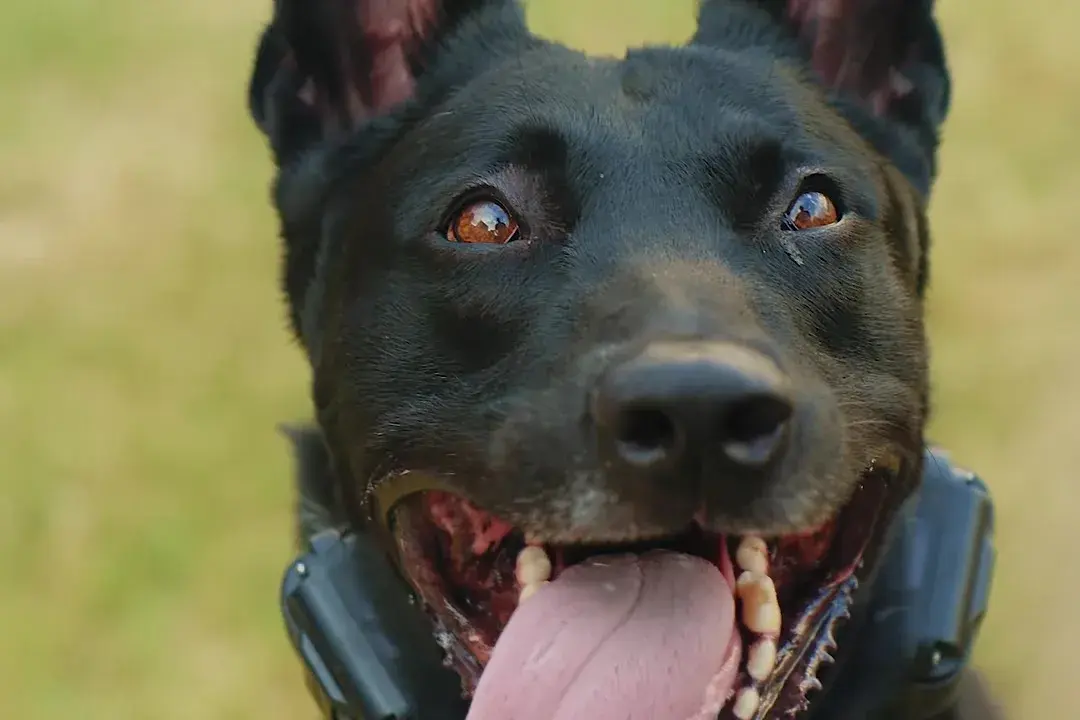
Everything above lands in your kitchen in a fairly direct way. The breed was fixed by people who argued about coats and agreed about work, and then went on into police and military work. The result is a dog the standard describes as bursting with energy and always ready to act — and that is a description of an ordinary Tuesday, not of an emergency.
Belgian farms were small, and the FCI standard still lists the Malinois as a family dog as well as a service dog. Our view, from living and working with them, is that a well-bred one with a clear off-switch can live well in a house, and that one without regular work to do is a hard dog to live with.
So the practical questions are about the household, not the breed’s fame. Will one adult actually own the training? Is the dog going to be part of the day rather than parked outside it? Would a dog with a little less engine, such as a working-line German Shepherd, suit the house better? Our Belgian Malinois breed page goes through what one is like to live with and to work in front of, and the three-breed comparison sets it beside the two alternatives honestly.
If you decide the Malinois is right, the way you get one matters as much as the breed. A fully trained adult is already trained when it arrives; with Build Your Own Pup, your family raises a puppy with our involvement.
Every Outside Fact On This Page
Kennel clubs, a breed club, three government or institutional sources and three news reports. Where two disagree, the page says so.
- FCI — Standard N° 15, Chien de Berger Belge (Belgian Shepherd Dog), English text — The 1891 club and Cureghem gathering, the 1892 standard, 1901 registration, the four varieties, colours, size, weight, temperament, faults and the ban on matings between varieties.
- FCI — Belgian Shepherd Dog nomenclature page — Definitive FCI recognition dated 1 January 1956; the breed is subject to a working trial.
- American Kennel Club — Belgian Malinois History (Elaine Waldorf Gewirtz) — Mechelen and Malines, the 1911 imports, the Miscellaneous, Working and Herding Group dates, and Cairo’s weight.
- American Kennel Club — Meet the Belgian Breeds (Elaine Waldorf Gewirtz) — The place names behind Groenendael, Tervuren and Laekenois, and the Belgian Sheepdog’s AKC recognition in 1912.
- American Kennel Club — Belgian Malinois Facts (Katherine Ripley) — Pronunciation, 1959 recognition 48 years after the first studbook entry, police and SEAL use, fawn and mahogany.
- American Kennel Club — press release, the Belgian Laekenois recognised (1 July 2020) — Full recognition and Herding Group eligibility for the fourth Belgian.
- American Belgian Malinois Club — History — Reul, the 1911 AKC studbook entries, separate breed status in 1959, renewed interest in 1963, and championship eligibility in 1965.
- 9/11 Memorial & Museum — No Ordinary Dog (event page, June 2020) — Cairo, a Belgian Malinois, named publicly after the May 2011 Abbottabad raid; handler Will Chesney.
- Military Times — Conan, the dog from the al-Baghdadi raid (31 October 2019) — Breed, the tunnel, Gen. McKenzie on the injury from live electrical cables, roughly 50 missions over four years, return to duty.
- U.S. Secret Service — K-9 Hurricane awarded Distinguished Service Medal (March 2022) — Hurricane’s breed, his November 2012 start on the Emergency Response Team, the October 2014 intruder.
- PDSA — “Animal OBE” for US Secret Service dog (4 October 2019) — The 22 October 2014 incident, retirement in September 2016, and the announcement that he would receive the PDSA Order of Merit on 4 October 2019, the first international animal to do so.
- KTVU — Ex-Secret Service dog credited with saving Obama from White House intruder — The intruder struck and swung Hurricane; the President was home and unharmed.
- Associated Press via PBS NewsHour — Don’t pet the Secret Service dogs (9 July 2014) — The Secret Service had used Belgian Malinois exclusively, and used other breeds for a program working around crowds.
Every link above was opened on 8 October 2026. Kennel-club pages and breed-club archives get reorganised; if a link now lands somewhere else, or a date no longer matches what the club publishes, let us know which one and we will re-check the Malinois record against it.
When We Publish Something Worth Reading
No sequence, no drip, nothing automated. One email when we have written something a buyer would actually use — which is a handful of times a year, not a handful of times a month. Leave and we stop.
Talk Through Whether A Malinois Fits
We are based in Dallas–Fort Worth. A dog bred for sheep work and kept for police work needs a job at home, so the first things we will ask are who will train it every day, how many hours it would spend alone, and whether there are small children or other dogs in the house. If those answers point to a German Shepherd, or to no dog yet, we will say so on that call. Our PSA decoy listings are public if you want to check who you are talking to first.