
Malinois vs Dutch Shepherd vs German Shepherd
You have narrowed it to three and cannot choose. That is the right shortlist. This is not three breed descriptions stacked up — it is the decision, sorted by the things about your household that actually move the answer.
Which Protection Dog Breed Is Best For A Family?
For most families, the German Shepherd. It runs at the lowest idle of the three, it absorbs the mistakes a new handler will make, and it can take instructions from two or three adults whose rules do not quite match. Take a Belgian Malinois only if one named person here is looking forward to the training itself rather than tolerating it. The Dutch Shepherd sits between them and suits a household that takes its dog everywhere.
That is the answer we give more often than any other, so it belongs at the top rather than two thousand words down. It is also not the whole answer, because “which breed” is doing less work than the people asking it believe. These three overlap enormously: in the working population, Belgian Malinois and Dutch Shepherds have been bred to one another for decades, and in daily life a moderate Malinois sits closer to a solid working-line Shepherd than any comparison article admits.
So this page is organised around you. Each section below is a variable in your own household, all three compared underneath it, and a verdict at the end. Where a breed genuinely wins we name it. Where the difference is smaller than the internet claims, we say that instead. For one breed at depth, go to the Belgian Malinois, Dutch Shepherd and German Shepherd pages.
The Individual Dog Beats The Breed, Every Time
Breed sets a range. The line the dog came from sets a narrower range inside it. The individual animal sets the actual number, and that number is what moves into your house. Put a badly bred German Shepherd beside a well-bred one and you have two animals with nothing in common but a silhouette. Put a good working Malinois beside a good working Dutch Shepherd and you have to look hard to find the difference. The spread inside each breed is wider than the gap between them.
Ask what actually makes a dog safe to raise children around and none of the answers are on a breed page. Nerve: whether the animal is still reasoning after something has startled it. Recovery: whether it returns to baseline after the doorbell has gone twice. Neutrality: what it does when a stranger walks past and nothing happens. Clarity: whether it waits for you to decide. All three breeds produce dogs with all four and dogs with none, and the second kind photographs exactly like the first.
That is why every dog is evaluated in person from inside the suit, and why the most useful thing you can learn before you shop is how to watch one work — our guide on how to read a protection dog demo covers what a decoy can hide. What breed does reliably predict is narrower than the market implies: coat, size range, how hard a good one is to find, and a rough tendency in ambient intensity. It never predicts how much training a dog arrives with — that is the programme, not the paperwork, and the vocabulary sellers use around it is unpicked on our training levels page.
Who Each One Is Actually For
One card each, written as the buyer rather than as the breed. If one describes your household and the other two plainly do not, go to that breed’s page.
Belgian Malinois
The highest ceiling and the highest idle. It needs a task with a beginning and an end most days of its life, and that requirement is indifferent to how your month is going. Buy it because one person here wants to be a handler. Buy it for the reputation and month three is spent managing a bored working animal.
Dutch Shepherd
Comparable capability to a Malinois with a steadier hand on the throttle — likelier to hold still and watch a room than to need something to do in it. What you live with is the memory. It keeps a running file on your street: who came, when, and how that went. Early warning if somebody is managing it, a hardening grudge if nobody is.
German Shepherd
The one we recommend most, and the name covering the widest range of dogs. It runs at the lowest idle of the three, absorbs the mistakes a new handler will make, and can be left in a room without a plan for it. The catch is supply: the word is printed on far more dogs than the working version of it.
Who Is Actually Going To Handle This Dog?
Not the household. The person. A trained dog attaches to whoever feeds it, walks it and works it, and that person carries the whole thing. So the first question is never which breed. It is who.
If this is your first serious protection dog, take the German Shepherd. It forgives things — the mistimed correction, the leash you tightened for no reason, the fortnight the rules quietly slid. A Malinois does not. It is not spiteful, it is precise: it notices inconsistency and works the gap, and a handler who is still learning ends up in a negotiation they did not know had started. The Dutch Shepherd forgives handling errors reasonably well and remembers events unreasonably well.
Then count the adults. If two or three people will handle this dog with slightly different rules — which is what happens in a family, whatever gets promised at the kitchen table — the German Shepherd absorbs that better than the other two by a clear margin. A Malinois wants one person running it, and will pick that person itself if you do not.
Verdict: German Shepherd for a first-time handler or a house with more than one adult in charge. Malinois only if the handler already has real experience and wants more of it.
How Many Hours Does Your Week Really Have?
Answer this with your calendar open rather than with your intentions. The floor is identical for all three and lower than people expect: ten honest minutes of obedience a day folded into ordinary life, plus protection work with a decoy on a schedule.
Above that floor, what separates them is not training time. It is the rest of the day. A Malinois needs a task with a beginning and an end, most days, and a walk is not one. Skip it for a fortnight and it will invent a job rather than go without one — and you do not get to choose which. The candidates are whatever the property offers: a gate, a mower, a strip of lawn, or whichever person in the house has turned out to be the most interesting to supervise. The Dutch Shepherd sits just under that, likelier between sessions to hold still and watch than to go looking.
The German Shepherd is the least demanding of the three and it is still a demanding dog. “Calmer than a Malinois” is the most misheard sentence in this business, because the comparison is carrying the whole phrase and the word people walk away with is the absolute one. Least is not little, and the distance between them is where families get into trouble.
Verdict: the ten-minute obedience floor is the same for all three. What separates them is the hour either side of it — most days for a Malinois, most days but forgiving for a Dutch Shepherd, and a Shepherd that will let you have a bad Wednesday.
Children, Guests And The Front Door
Start with the part that is not a breed question, because it matters most. None of these dogs is safe around children because of its breed. It is safe because that individual animal has clean nerve and clean recovery and is managed properly by the adults in the house. A badly bred German Shepherd is worse around your kids than a well-bred Malinois, and the paperwork will not tell you which is in front of you.
Traffic volume is the first real difference. If your front door is busy — your kids’ friends, deliveries, trades, a rotating cast nobody introduces — the German Shepherd absorbs it best of the three, and it is not close. The Dutch Shepherd is worst in that environment, and not because it is the sharper dog. A breed that files people one at a time has nothing useful to do with a crowd of them, and an unmanaged front door is exactly that — a crowd, arriving in a different order every day.
Arousal is the second. Children are fast, loud and unpredictable, and a Malinois notices that more than the other two do. In a good one it is nothing: it looks, files the noise as normal, goes back to what it was doing. In a mediocre one it is a decade of management inside your own home. That is a per-dog answer, and it is what we watch hardest for a household with small children. The procedure is identical for all three either way: the dog placed or crated when trades are in, visitors not reaching for it, children supervised the way you would around any powerful animal.
Verdict: German Shepherd for a busy front door. Any of the three for a settled house — provided you chose the individual dog on neutrality and recovery rather than on the name.
What Is The Dog Actually For?
Four answers show up on our calls and they point at four different dogs. “I want it with me.” If the dog is going wherever you go and the answer to “can it come?” is always yes, you are describing a dog that has to be easy company for forty hours a week and useful for the other few. That is the narrowest brief of the four, and the Dutch Shepherd tends to fill it best.
“I want my family covered while life happens.” A dog plainly part of the household — front door, kids, guests, weekends — that still means something if a night goes badly. German Shepherd. This is most people, which is why it is the answer most people get.
“I want to train, and I want the most dog I can handle.” Malinois, and do not apologise for it. That household is real: somebody who will be on a field on a Saturday in February because they wanted to be there, not because the dog was owed it.
“I want presence at the door and nothing else.” Then buy none of them. You would be paying a great deal for deterrence that a motion light and a visible camera supply for a fraction of it, and neither of those can ever turn out to be the thing that went wrong at a family barbecue.
Verdict: match the dog to the sentence you just said out loud. If the honest sentence was the fourth one, the answer is not a breed at all.
Hair, Noise And Living With It Indoors
Shedding first. The German Shepherd carries a heavy double coat and sheds continuously, with two seasonal blowouts a year that redecorate a house. The other two carry short double coats and shed noticeably less, though none of the three is a low-hair animal. If somebody in your house has a strong opinion about hair on furniture, that is a legitimate input and it points away from the Shepherd.
Noise surprises people. The German Shepherd is the likeliest of the three to become an ambient barker at a window, because alerting is much of what it was selected to do. The Malinois is louder in drive — vocal on a start line, vocal when thwarted — and quiet the rest of the time. The Dutch Shepherd tends to be quietest at home and earliest to alert.
Size last, because it is the request we refuse most often. “Give me the biggest one in the litter” treats mass as though it were ability. It is not. A heavier dog is simply more of whatever that dog already was, which is bad news roughly as often as it is good, and it asks more of the same joints across the same number of years.
Verdict: if hair on the sofa is a genuine issue in your house, take one of the two short-coated breeds. Otherwise this variable rarely decides anything on its own.
Heat Is Real. Coat Is Not All Of It.
We are in North Texas and deliver nationwide, so this arrives on nearly every call from a hot state: does the German Shepherd’s double coat rule it out for a July afternoon? Concede the true part first, because our own German Shepherd page argues it: that double coat is a standing tax in a Texas summer and on your floors, and the two short-coated breeds simply do not pay it. What the coat does not do is settle the safety question, and the reason is worth understanding rather than taking from us. In the largest primary-care study of heat-related illness in dogs we can find — 905,543 dogs under veterinary care in the UK, published in Animals in 2020 — 74.2 per cent of heat-related illness events with a recorded trigger were exertional, meaning the dog was moving. Environmental heat accounted for 12.9 per cent and confinement in a vehicle for 5.2 per cent, and most exertional cases followed low-intensity activity such as walking.
In the same paper, German Shepherds came out with roughly a third of the odds of exertional heat-related illness compared with Labrador Retrievers — a statistically significant reduction rather than a wash. The breeds that fared badly were the flat-faced ones, plus the Chow Chow, the Greyhound and the English Springer Spaniel.
Now the counterweight, because leaving it out would make this a sales page. The same authors note that Belgian Malinois have previously been identified as at increased risk of exertional heat-related illness — in referral hospital populations skewed toward military and police dogs, a group far closer to yours than a British pet Labrador. They also cite work finding heat-related illness the second most common cause of traumatic death among US civilian law enforcement dogs, three-quarters of those events caused by confinement in a vehicle.
Read that last figure twice. Then note what the paper does not contain: it never measures coat length at all, so it cannot tell you a double coat is free — which is why we conceded that point above rather than argued it. What it does show is where the risk concentrates, and it is not on the dog’s back. It is in exertion, in the vehicle, and in a handler who wanted a hard session at three in the afternoon in August. One honest limitation on top of that: the data is British, and a UK summer is not a Texas one. We take the proportions from it, not the rates.
Verdict: the coat is a genuine cost in a Texas summer and the short-coated breeds carry less of it. It is still not the variable that decides whether a dog is safe in the heat — the workload, the vehicle and the time of day are, and those are inside your control for all three.
Health And Lifespan: The Numbers That Are Real
We are not veterinarians and none of this is veterinary advice. It is what we would want in front of us before signing, with the sources attached.
Lifespan. The best population figure we have found comes from UK veterinary life tables published in Scientific Reports in 2022, built from 30,563 confirmed canine deaths between 2016 and 2020. Life expectancy at birth across all dogs was 11.23 years; for the German Shepherd Dog specifically it was 10.16. Neither of the other two appears in those life tables — the analysis covered eighteen breeds and the Belgian Malinois and Dutch Shepherd are not among them — and we have not found a comparable mortality-derived figure for either. So treat a quoted Malinois or Dutch Shepherd lifespan as an estimate rather than a measured one. Plan on a decade for any of the three.
Structure. The German Shepherd’s orthopaedic reputation is not invented, and the most directly relevant comparison we can point you at is a study of military working dogs in Frontiers in Veterinary Science in 2020: CT scans of 59 dogs under six years old, 41 German Shepherds and 18 Belgian Malinois, measuring two lumbar spine malformations. Both traits appeared in both breeds, with their frequency and measured degree greater in the German Shepherds — and greater again in heavier dogs of either breed. The authors call these proposed risk factors rather than diagnoses. We read it as one more argument against buying the biggest dog in the litter.
What to do with any of that. Hip and elbow screening is a per-dog question and the one health issue worth being difficult about. Ask for the individual dog’s evaluations and its parents’, look them up yourself rather than being told what they say, and ask what happens to a dog that fails. Then add up the recurring side before you spend anything on the dog itself. Those line items are on our pricing page, alongside what other companies actually charge.
Verdict: the German Shepherd carries the most documented structural risk of the three, and it is still the right dog for most families. Screen the individual, buy moderate, and do not buy weight.
How Hard A Good One Is To Find
This variable changes what you should look for more than any temperament difference here. The German Shepherd was the fourth most popular breed in America on the American Kennel Club’s 2025 rankings, behind the French Bulldog, the Labrador and the Golden Retriever, and it has sat in the top four every year that page lists going back more than a decade. Neither of the other two is anywhere near the top five.
Popularity is not a compliment here. It means the German Shepherd has the widest quality spread of the three: more dogs bred to a ring standard, more bred to no standard at all, and a great many bred because the name sells. Finding a working-line Shepherd sound enough to hand to a family takes far longer than the breed’s numbers suggest, and there is always a cheaper dog wearing the same word.
The Malinois has the opposite problem and the same result. Serious breeding programmes are concentrated in this breed more heavily than in either of the others, so the very best Malinois are the easiest of the three to actually locate. Underneath that sits a hype market: dogs bred because the name moves, and a photograph will not separate them from the real thing at eight weeks or at two years. These are the dogs that come back up for sale before their second birthday, and the failure is not that the buyer got too much dog. It is that the animal had the engine and nothing to aim it with. The Dutch Shepherd’s version of the same trick is sold on scarcity: brindle is fashionable, the name sounds calmer than “Malinois” to somebody three weeks into research, and the price follows the impression. A coat colour is evidence of nothing, and a pedigree on its own is not much better.
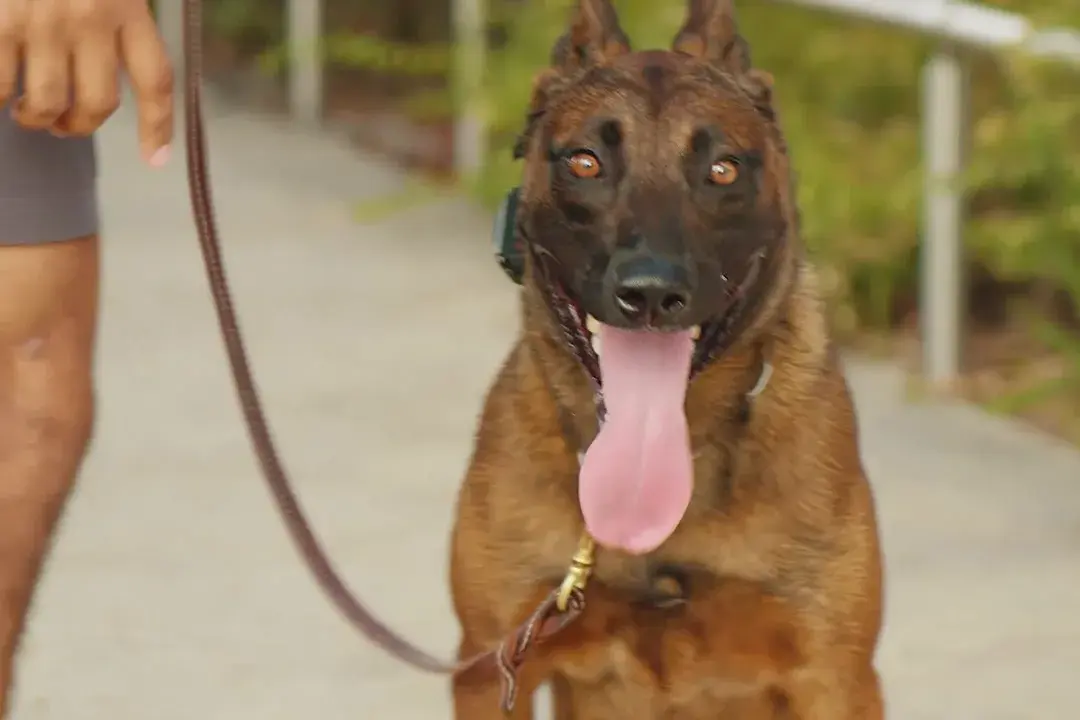
One question cuts through all three markets, and it is about two specific animals rather than a breed: what did this dog’s sire and dam do, under whose judging, on what date? Those are checkable facts with names and results attached to them. A seller who answers by telling you about the breed has just told you no such facts exist. None of the three changes what we will and will not hand over at the end of it; that standard is the same for all of them, and it is written out on our fully trained page.
Verdict: no breed on this page protects you from a bad seller. The individual dog’s line is the entire question, and it is answered the same way for all three.
If You Are This, Buy That
No hedging and no scoring system. Find the line that describes your house and take the answer attached to it. If two disagree, the earlier one wins.
- First serious protection dog, busy ordinary family, more than one adult handling it: German Shepherd. That is most people, and it is not a compromise.
- You will be on a field on a Saturday in February, and a difficult dog reads as interesting rather than tiring: Belgian Malinois.
- The dog goes everywhere with you — truck, job site, practice — and between jobs you would rather it settled and observed than went hunting for something to do: Dutch Shepherd.
- Small children plus constant unmanaged traffic at the front door: German Shepherd, selected on neutrality before anything else.
- Guests you will never meet twice — a rental turnover, a client-facing office at home, a week that is mostly new faces: German Shepherd, and specifically not the Dutch Shepherd.
- Somebody in the house cares about hair on the furniture: Malinois or Dutch Shepherd.
- In a hot state and worried about the coat: any of the three. Fix the vehicle and the time of day instead.
- You want something that looks serious at the door and nobody intends to train: none of the three. Buy a well-bred family dog and better lighting.
- You cannot name the handler out loud today, with that person in the room: none of the three, yet. That is a timing answer, not a rejection.
Notice how little of that is about the dog. Breed is the last decision, not the first. Selecting the individual animal is our job, and we do it from inside the suit. PSA lists both of us as decoys at its sanctioned trials, which means a dog’s nerve and recovery reach us through the equipment rather than through a lens. That is checkable rather than a thing to take on faith, and it is set out with the trials on our about page. Terminology and upkeep questions are collected in our FAQ.
Every Outside Figure On This Page
Four of them, each read off the page it links to. Everything else here is craft knowledge and should be weighed as exactly that.
- Hall, Carter & O’Neill, “Dogs Don’t Die Just in Hot Cars — Exertional Heat-Related Illness (Heatstroke) Is a Greater Threat to UK Dogs”, Animals, 2020
- Teng et al., “Life tables of annual life expectancy and mortality for companion dogs in the United Kingdom”, Scientific Reports, 2022
- Dragicevich et al., “Computed Tomographic Measures of Funnel-Shaped Lumbar Vertebral Canal and Articular Process Dysplasia Malformations Differ Between German Shepherd and Belgian Malinois Military Working Dogs”, Frontiers in Veterinary Science, 2020
- American Kennel Club, Most Popular Dog Breeds, 2025 rankings
No price for our own dogs appears above, and that is deliberate. We quote per dog, on a call, once we know what your household needs.
When We Publish Something Worth Reading
No sequence, no drip, nothing automated. One email when we have written something a buyer would actually use — which is a handful of times a year, not a handful of times a month. Leave and we stop.
Describe Your Household And We Will Pick
Tell us who is handling the dog, what your week looks like and who else lives in the house, and we will say which of the three we would send — including when the honest answer is different timing, or no dog at all. Not sure you want one yet? Start with our guide on that question instead.