
Should You Actually Buy A Protection Dog?
Probably not. That is the honest answer for a lot of people who ask, and we would rather you read why here than find out after the deposit clears. This page is written to talk you out of it if it should.
Most People Asking This Should Not Buy One
We sell protection dogs. You should read the rest of this page knowing that, and weigh it accordingly. We are writing it anyway because the wrong placement is worse for us than no placement: a dog in a house that cannot handle it comes back to us in phone calls, in a family that quietly stops training, and eventually in a dog that is nobody’s idea of a success. Taking that deposit would be the expensive mistake, not the sale we passed on.
The reason most people should not buy one is not that they are unsuitable people. It is that they have correctly identified a real worry and then reached for the most dramatic available answer to it. A trained dog is a specific tool for a specific situation. Used for a general sense of unease, it is an expensive, demanding, decade-long commitment aimed at a problem a locksmith and an alarm company could have solved in an afternoon.
What follows is the conversation we have on the phone, written down: who should walk away, what these dogs genuinely cannot do, what we would tell you to buy instead, what changes in your life if you do go ahead, and a short list of questions to answer honestly before you call anyone — us included.
Six Households That Should Not Buy This Dog
Nobody Wants To Be The Handler
A trained dog needs one person who trains it, enforces the rules, and makes the decisions. The dog attaches to whoever feeds it, walks it and works it — not to whoever paid. If the person driving this purchase is not the person who will do the daily work, or if that person has not agreed out loud, the dog will find the real handler on its own and it may not be the one you had in mind. Households where the answer is “we all will” usually mean nobody does.
You Want A Deterrent, Not A Dog
A deterrent is a thing you buy once and stop thinking about. A dog is an animal with a decade of opinions, vet bills, hair, noise and needs, and it does not care that you bought it for a reason. If the appeal is the idea of the dog rather than the reality of living with a working animal every day, buy the thing that is actually a deterrent. A fence, lighting and cameras will not disappoint you the way a bored working dog in the wrong house will.
Something Frightening Just Happened
A break-in, a stalker, a bad night on a dark street — a fright is the most understandable reason to start shopping and the worst time to finish. Adrenaline has a short half-life and a working dog has a long one. The fear that makes the purchase feel obvious this week will not be the thing getting up at six to train in February. If the answer is still yes once the adrenaline is gone, that is a real answer. Nothing about this decision improves by being made fast.
Your Week Has No Room In It
Protection work is a perishable skill. Ten honest minutes of obedience a day, folded into ordinary life, keeps a finished dog finished; periodic work with a decoy keeps the protection side from drifting. That is not much time, which is exactly why the failure is so common — people who could not find ten minutes for a puppy do not suddenly find them for a serious adult dog. Look at your actual week, not the one you intend to have.
You Want A Pet That Also Protects
The order of those words decides the outcome. A dog bought as a pet first gets maintained like a pet, and a year later the owner is confused about why the trained part faded. It faded because it is a trained behaviour and nobody trained it. There is nothing wrong with wanting a family dog — most people should have one — but a family dog with a protection label attached to it, and no maintenance behind the label, is the worst version of both purchases.
You Need Coverage While You Are Out
A protection dog works with a handler. When the house is empty the dog is usually crated, and a crated dog is not a security layer — it is another thing in the house you would have to worry about. If the hours that frighten you are the hours nobody is home, you are describing a problem that alarms, cameras and better doors solve directly, and that a dog solves not at all.
If two or more of those describe your house, the rest of this page is still worth reading — but read it as a decision you are making later, not now.
Four Things A Protection Dog Is Not
The marketing in this industry works by leaving the limits unsaid. Nobody writes that the dog is asleep in a crate while you are at work; they write “peace of mind” and let you fill in the rest. Here is the filled-in version.
It Is Not A Security System
It does not monitor, it does not record, it does not call anyone, and it cannot tell a court what it saw. A dog is a deterrent with teeth and a set of trained behaviours. It occupies a completely different part of the problem from the equipment, which is why sensible households run both and why nobody in this business should be selling a dog as a replacement for either.
It Cannot Judge What You Did Not Teach
Dogs read behaviour and body language. They do not read intent, and they have no concept of whether a person on your porch is lawfully there. A trained dog does what it was trained to do, in situations that resemble the ones it was trained in — and it looks to you for the decision. That is not a limitation of our training; it is the design. A dog making its own calls about strangers is the version of this animal nobody should own.
It Is Only Where You Are
The dog covers the ground you are standing on with it. It is not with you at work, in most shops, at the school pickup line, or on the plane. People buy a dog to feel less exposed and then discover that the hours they actually felt exposed are hours the dog was never going to be there for. Map the specific situations that worry you before you decide the dog covers them.
It Adds A Thing To Manage
A protection dog does not reduce the number of things that can go wrong in your home — it adds one, and that one is powerful, athletic and living in your kitchen. Gates get left open. Guests reach for dogs. Kids bring friends. Managing that competently every single day is the actual job. If reading that feels heavy rather than obvious, listen to that reaction; it is telling you something true.
None of that makes a trained dog useless. It makes it narrow. Narrow tools are worth owning when the situation is the one they fit.
The Alternatives, Named Honestly
Every company in this category will tell you a dog is the one thing that thinks. That is true, and it is also the answer to a question most buyers are not asking. If what you want is for your house to be a harder target, or for your family to feel safer at night, there are four things we would tell you to do first — and for many people one of them is the whole answer.
A Monitored Alarm And Cameras
It works at three in the morning in an empty house, which is the exact scenario most buyers describe to us. It costs a fraction of a trained dog, needs no training from you, does not need boarding when you travel, and produces a recording. For a straightforward property-crime worry this is the better purchase, and it is not close.
Doors, Locks, Glass And Lighting
The least glamorous layer and the most reliably useful one. Solid exterior doors, long screws in the strike plates, deadbolts that are actually thrown, motion lighting, a lit approach, shrubs cut back from the windows, a garage door that cannot be lifted. None of it photographs well. All of it works while you sleep and asks nothing of you afterwards.
A Large Dog With No Bite Training
Most of the deterrent value of a dog exists before any protection training does. What a stranger outside your door reacts to is a large, alert, noisy, unpredictable animal — and a well-bred, well-socialised dog with no bite work delivers that without the handling burden, the boarding problem or the liability profile. Say it plainly: for a lot of households, this is the right dog.
A Family Dog With Real Obedience
Listen to how people describe what they want a dog to do and a lot of it turns out to be obedience, not bite work: a recall that holds off a squirrel, a place command that survives the doorbell, a walk that does not tow you into the street. That is a training problem a good local trainer solves, it changes daily life more than protection work does, and it costs a small fraction of what a finished dog does.
Our own FAQ already says this in fewer words: sometimes the honest answer is a well-bred family dog and a better alarm system, and we would rather say so early than take a deposit. It is not modesty. A family that spends months resenting a dog they should never have bought is not a customer we want, and they tell people.
What Actually Changes In Your Week
The training never finishes. A finished dog is finished on the day it arrives and slowly stops being finished from the day after, unless somebody keeps it. That means obedience folded into ordinary life — working for food, holding a place command while you eat, heeling out of the front door instead of towing you through it — plus protection work with a decoy on a schedule. Skip the maintenance and the dog gets worse. That is a handling outcome, not a training failure, and it is the single most common way these placements go sideways.
The first weeks set the rules for years. A finished adult settles faster than people expect, because it has been handled, kennelled, transported and worked around strangers its whole life. What it does next is test whether your rules are real. Whatever you allow in that window is the dog you live with afterwards. The structure you hold matters more than any timeline anybody quotes you.
Guests and trades become a procedure. The dog gets crated or placed when contractors are in the house. Visitors do not reach for it. Children and their friends are supervised the way you would supervise around any powerful animal. Done consistently this is unremarkable and takes seconds. Done inconsistently it is the precise situation that ends badly, and the inconsistency is always the human’s.
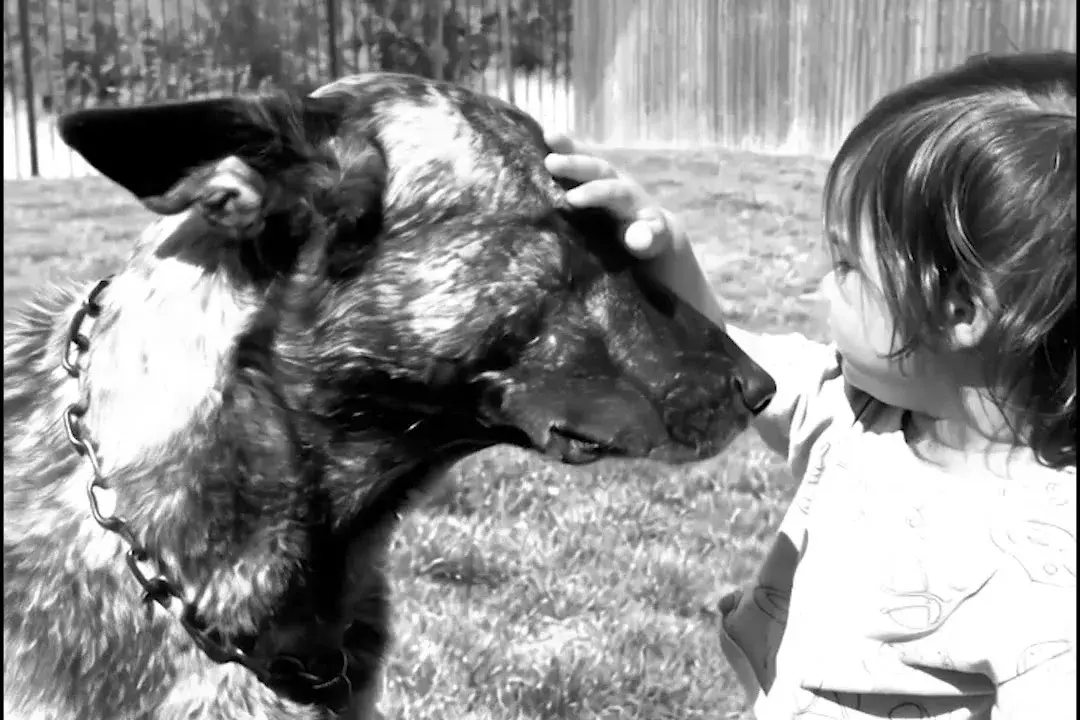
Travel gets complicated. Not every kennel will board a dog with bite training, and the ones that will are not always nearby or cheap. Ask before you buy, not the week before a holiday. The same applies to family who might have watched a normal dog for you — that offer changes when the dog is this one.
The recurring cost is the real cost. Food, and a working dog eats more of it. Routine vet care plus the occasional injury, because these are athletic animals and they hurt themselves. Maintenance sessions. Boarding. Equipment that wears out. Add it up honestly before you spend anything on the dog itself — we set out the whole picture on our pricing page, including what the market actually charges and what each year afterwards costs.
Liability stops being abstract. Some pet insurers exclude protection and guarding work by name in their policy wording, which means a policy you assume covers the dog may not cover the thing the dog was bought to do. And Texas sets a statutory floor of its own: once a dog has been legally declared dangerous, its owner must carry liability coverage — or show equivalent financial responsibility — of at least $100,000. We are not insurance advisers and none of this is advice. It is the set of questions we think you should be putting to someone who is, before the dog arrives rather than after. The detail and the sources are on the pricing page.
The Households Where This Genuinely Works
We are not going to inflate this. A trained dog is not a guarantee of safety, it is not a magic presence, and owning one does not make anybody untouchable. What it is, in the right house, is a controllable deterrent that goes where you go, notices before you do, and does nothing at all until you say otherwise. The households where that is worth the burden tend to look like this.
- You wanted a dog anyway, and the protection work is the version of dog ownership you find interesting rather than the reason you are tolerating an animal.
- There is one obvious handler who likes training and will still like it in year three.
- Your exposure is specific and ongoing — you are publicly visible, you travel or work at hours that leave you alone, you live somewhere response times are long, or a known situation has not resolved.
- You want control more than you want capability, and you understand that the off-switch is the expensive part.
- You will keep paying for maintenance — food, vet care, decoy sessions, boarding, equipment — for the whole life of the dog, not just the exciting first year.
- You are willing to be told no, by us or by anyone else worth buying from.
Notice how little of that is about the dog and how much of it is about the person. That is the part the industry gets backwards. Selecting the dog is our job, and we do it from inside the suit — both of us are listed decoys at PSA-sanctioned trials, so we read a dog’s nerve and commitment from the receiving end rather than from behind a camera. You can read how that works on our about page, and which breeds we work with on the breeds page. But no amount of selection on our side fixes a handler who was never going to show up.
Eight Questions Before You Call Anyone
Answer them out loud, ideally with whoever else lives in the house. If you flinch at more than a couple, that is information, and it is cheaper to collect now than in year two of a working dog’s life.
Name the handler. Not the household — the person. Have they agreed to it out loud, in front of you, knowing what it involves?
What exactly are you protecting against? If the honest answer is “nothing specific, just in case,” a better door and a camera answer that more cheaply than we can.
Would you still want this dog if nothing frightening ever happened again? If the answer is no, you are buying a feeling, and the feeling will fade before the dog does.
Point at the ten minutes. Which ten minutes of your real weekday are the training minutes? If you cannot name the slot, it does not exist.
Who takes the dog when you travel — and have you actually asked them? Not every kennel accepts a dog with bite training, and finding that out the week before a trip is a bad time to learn it.
Who in the house is uneasy about this? Have they been asked directly, and would they tell you the truth? Their answer matters more than yours.
Have you called your insurance carrier yet? Before the dog, not after.
If we told you on the first call that the honest answer for your household is a better alarm and a well-bred family dog — would you be relieved, or would you keep shopping until someone said yes?
There is no scoring system here and we are not going to pretend one exists. The last question is the one that matters most.
When We Publish Something Worth Reading
No sequence, no drip, nothing automated. One email when we have written something a buyer would actually use — which is a handful of times a year, not a handful of times a month. Leave and we stop.
Talk It Through Before You Decide
If this page talked you out of it, it did its job and you owe us nothing. If it did not, call and describe your household — some of these conversations end with us telling you not to buy a dog at all, and that is a normal outcome here rather than a failed one. More detail on cost, upkeep and terminology sits in our FAQ.