Belgian Malinois
Protection Dogs
The dog people ask for by name, usually before they have met one. This page is mostly the argument against it — and if you still want one at the end, you may be the person who should have one.
The Breed We Talk
The Most People Out Of
Every company that sells protection dogs benefits from the Malinois mystique, this one included. It is the dog in the military footage and in every clip that goes around, and it arrives in a buyer’s head already carrying everything a protection dog is supposed to be. So read the rest of this page in that light: the sites selling you this breed have an interest, and the honest version of this page costs us work.
What the mystique leaves out is that the traits making the Malinois the most capable of the three breeds we place — the drive, the speed of the decision, the willingness to keep going long after another dog has concluded the situation is over — are the same traits that make it the wrong dog for most of the households that ask for it by name. We are not softening that. A large share of the people who call us wanting a Malinois end up hearing the argument for a German Shepherd instead.
What follows is that call, written down: what the breed actually is on the ground today, what one feels like from inside the suit, what happens in the thirty seconds after the pressure stops, and the specific things that make us pass on a dog other people would happily sell you.
Working Lines, Show Lines,
And The Split Nobody Advertises
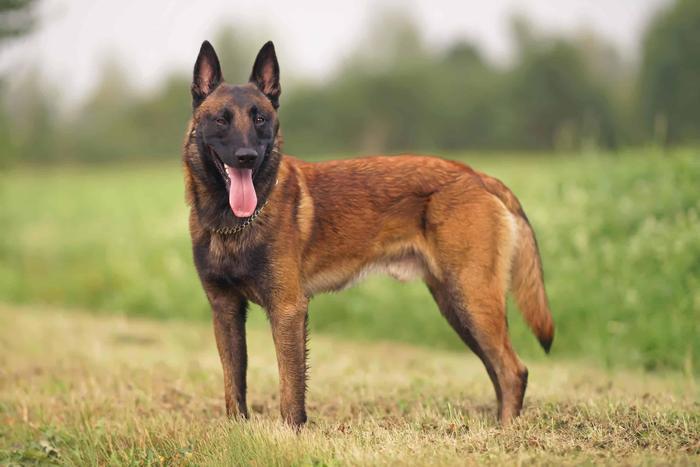
Every breed article splits dogs into show lines and working lines, and the split is real enough in the Malinois — there are conformation-bred dogs carrying the name, generally heavier, generally softer, bred toward a picture rather than a job. If you are shopping for a protection dog, they are not really your problem, because you will rarely be offered one.
The split that costs buyers money is a different one, and nobody advertises it. A Malinois can come out of a line where several generations were tested in front of a decoy — Dutch police-dog work, ring sport, IGP, PSA — and where somebody kept the dogs that held up and stopped breeding the ones that folded. Or it can come from two Malinois put together because Malinois sell. The second dog is indistinguishable at eight weeks. It is still indistinguishable in a photograph at two years. The difference surfaces on the one day you cannot arrange in advance.
That is why pedigree matters here, and why it matters differently than people assume. It is not a certificate of quality — plenty of beautifully bred dogs are unremarkable, and some of the most serious working dogs alive carry paperwork nobody would frame. What a working pedigree buys you is a probability and a set of names you can go and look up. What a hype-bred Malinois buys you is a coin flip on an animal that will grow up large, fast, and desperate for a job. Those are the dogs that get rehomed at eighteen months, and the reason is almost never that they were too much dog for the work. It is that they were never suited to the work and had all the drive anyway.
So ask a seller what the dog’s parents did, who tested them, and in front of whom. Not which titles sit on the pedigree — what the dogs did on the field and who was watching. A seller who cannot answer that is selling you the name of a breed.
What A Malinois Is Like
To Take A Bite From
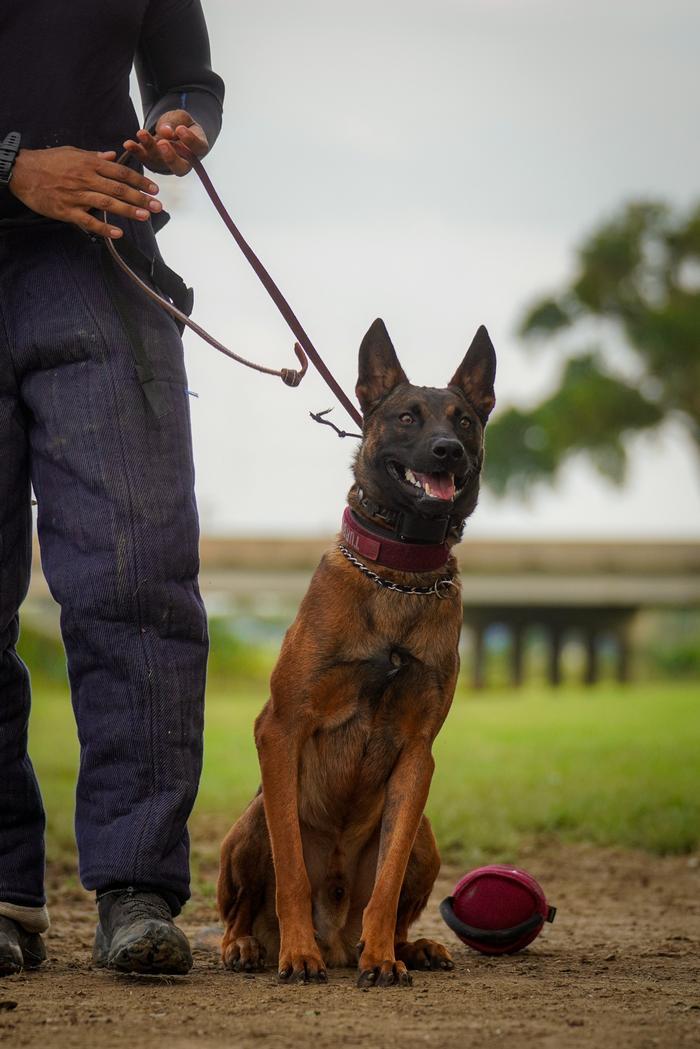
Both of us are listed decoys at PSA-sanctioned trials — the decoy is the person in the suit, which is a different vantage point from behind a camera, and the record is on our about page. It is the reason this section can be written at all.
The camera flatters a Malinois, which is a problem, because almost everything written about this breed is written from behind one. Speed reads as commitment. Noise reads as confidence. Neither survives contact.
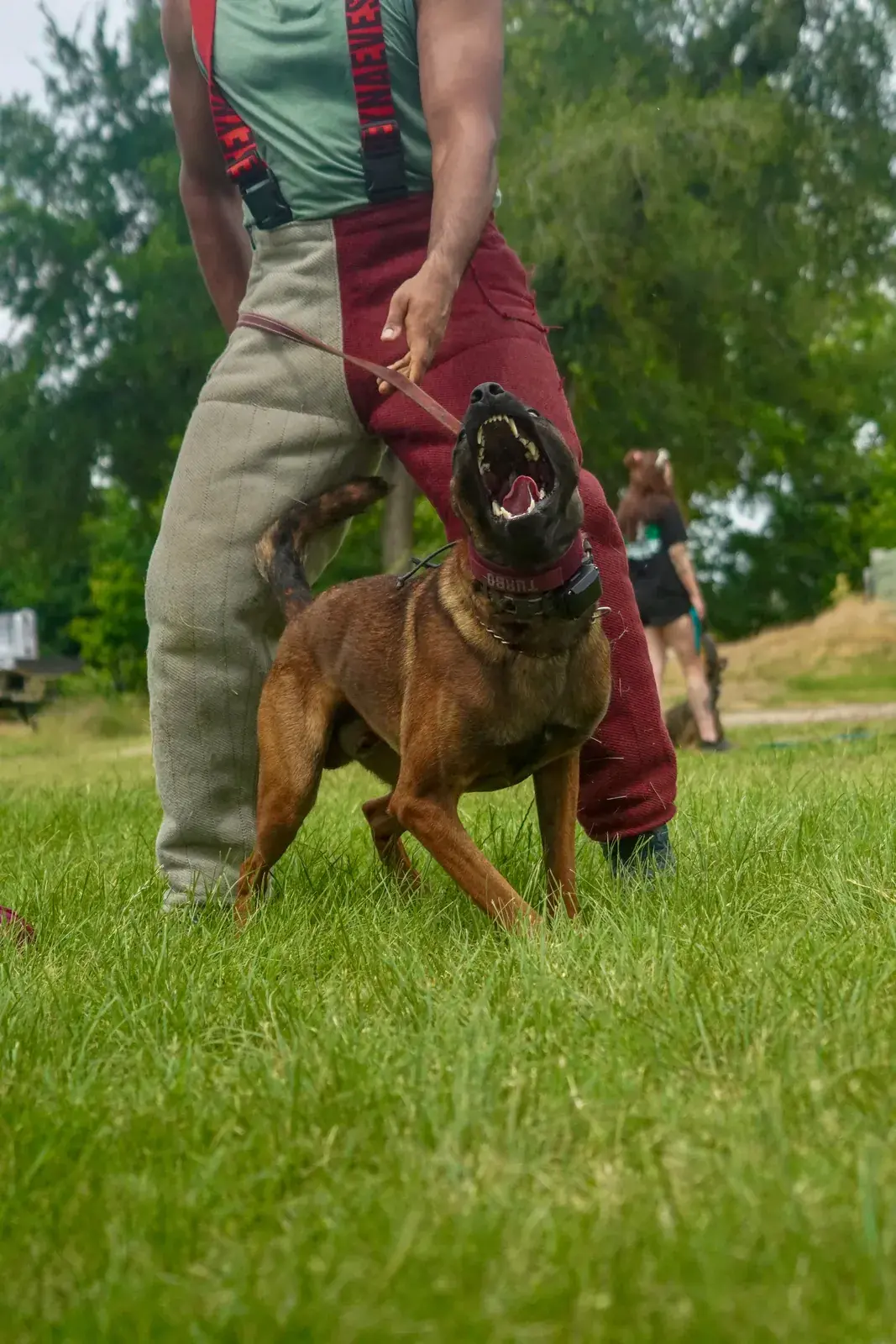
A good one closes the distance faster than you expect and arrives having already decided. The grip is deep and it is quiet. The dogs that worry us are the loud ones: the dog whose mouth keeps re-setting, that works its way toward the thinnest part of the equipment, whose noise is doing the job its grip is not. On a training field that reads as enthusiasm. It is the first thing to fail when something is actually at stake.
Then you push, and pressure in the suit is not violence — it is unpredictability. Stepping into the dog instead of away. Going still when it expects motion. Changing direction, changing height, taking away the pattern it has learned. A great many impressive-looking dogs come apart the moment the routine changes, because the routine was the thing they were confident in rather than themselves. The ones worth placing get quieter and harder to move.
What we are reading through the equipment, in order:
- Whether the dog decided before it arrived, or is still deciding after it lands
- Whether the grip settles and stays settled, or keeps renegotiating itself
- What happens the first time the pattern changes and the dog is wrong about what comes next
- Whether it gets louder or quieter as the pressure goes up
- Where the dog is looking in the moment the pressure stops
Underneath all five is a question the equipment itself cannot ask: is the dog reading the man, or reading the gear? The progression from sleeve through muzzle work to street clothes, and the step at which a dog can no longer be flattered, is set out in whether a sleeve-trained dog engages a person in street clothes.
A Malinois named Turbo being sent, biting, releasing and sitting to watch is on video at the Turbo send and bite-out page.
Recovery Decides Whether
It Belongs In A Home
That last one decides whether a dog goes into a family home, and it is the part almost nobody writes about. Everything above it can be trained, conditioned, or held together for the length of a demonstration. Recovery cannot.
Recovery is what the dog does in the seconds and minutes after the work ends. The out is given, the suit stops moving, the situation is over — and the dog now has to arrive at that conclusion on its own, inside a body still full of adrenaline. Does it clear, breathe, and come back to its handler as a dog again? Or does it stay parked at the top, pacing, re-scanning, hunting for the thing that just stopped happening?
Both dogs bit. On video both dogs look the same. In a house they are not remotely the same animal. A dog that recovers cleanly can live in a kitchen with children in it, because when something startles it — a dropped pan, a door, a stranger who moves wrong — it goes up, resolves it, and is back down within seconds. A dog with poor recovery goes up over nothing and then stays up, and everything that happens afterwards is filtered through an animal that has not come back yet. That is the dog people later describe as having bitten out of nowhere. It was not out of nowhere. It was a long way downstream of something else, and nobody was counting.
So the bite is the setup and the next few minutes are the test. We want a dog that can be taken to a genuinely high place and brought back down, more than once, without the floor rising each time. A dog whose baseline creeps upward across a session — a little more wound with each repetition, slower to settle than the round before — is telling you exactly what it will be on a Tuesday evening in your living room after the doorbell has gone twice.
This is also why intensity is cheap and recovery is expensive. There is no shortage of Malinois that will bite hard. There is a real shortage of Malinois that will bite hard and then lie down.
Are Belgian Malinois
Good Family Dogs?
Are Belgian Malinois good family dogs? The honest answer is that some of them are, in some households, and the breed’s reputation for being unliveable comes almost entirely from dogs placed outside both.
A well-bred, well-selected Malinois with clean recovery is genuinely good with the children it lives with. It is not fragile, it is not indiscriminate, and the idea that it is a clock counting down is mostly a story told by people who have only ever seen the loudest thing the breed does. What it is not is low-effort. The trouble families run into is almost never aggression. It is a full tank with nowhere to empty it.
The Home It Belongs In
One adult who actively wants the handling job, rather than the person who lost the argument about it. The dog is folded into the day instead of fitted around it — it comes on the errand, it works for its food, it holds a place command while the house is busy. Somebody enjoys training on a Wednesday in the rain, because the training is not a phase that ends; it is the maintenance the dog runs on. Space helps. A person who likes the work helps considerably more.
The Home Where It Goes Wrong
The house is empty ten hours a day, the dog was bought for what it represents rather than what it does, and the first month goes beautifully because everybody is excited. By the third month the sessions have quietly stopped and the dog has found its own work: the fence line, the vacuum, the door, a trench in the yard, one member of the family it has decided to manage. None of that is the dog failing. It is an animal doing precisely what it was built to do with the only material it was given.
Be honest with yourself about the second column, because it is a schedule rather than a character flaw. Plenty of capable, committed people simply do not have the week this breed needs, and they are better served by a different dog than by trying harder. That is not modesty about the Malinois. It is the single most common reason we point somebody at another breed.
The third month decides that rather than the first, which is why we wrote out what the first ninety days after delivery actually look like — decompression, the crate schedule, the week the dog tests your rules, and the maintenance that never ends.
Malinois vs German Shepherd
vs Dutch Shepherd
We place three breeds and we will say plainly when one of the other two is the better answer for you. All three sit side by side on the breeds page, and if you are stuck between them, our guide to choosing between a Malinois, a Dutch Shepherd and a German Shepherd decides it on your handler, your week and your front door rather than on the breeds themselves. Here is how the conversation usually goes on a call about a Malinois.
When the German Shepherd Wins
Most of the time, for most families. A solid working-line Shepherd carries less ambient intensity, forgives handler error, and goes off duty in the house without being asked to. If this is your first serious protection dog, if it has to slot into an already full life, or if two or three adults will be handling it with slightly different rules, the Shepherd is usually the honest recommendation. That is not a downgrade in capability. It is a different amount of dog to manage on an ordinary day.
When the Dutch Shepherd Wins
Most Dutch Shepherds in this work carry a similar engine to a Malinois, and the brindle coat is the difference people notice and the least important one. What we tend to feel is a dog a little more measured about how it spends itself and a little more forgiving of a busy week. They also hold context sharply — the place, the person, how the last encounter ended — which is an advantage handled well and a slow problem handled carelessly.
The Malinois wins when the work itself is the point: the household that wants a dog to train with for the next decade, that will actually be at the field, that reads maintenance as a hobby rather than a chore. In that home it is not the harder dog — it is the more rewarding one, because there is more animal to work with and it returns everything put into it. That household is real. It is simply not most of them.
The comparison people actually want — which breed is better at protection — has a boring answer. Near the top of each breed, the gap in capability is smaller than the gap between two individual dogs. The Malinois has the higher ceiling for sport and for work that runs all day. For a family that needs a dog to be reliable, neutral in public, and serious exactly once, the deciding variable is that individual dog’s nerve and recovery, not the breed on the paperwork. Picking a breed and then hunting for a good example of it is backwards. Describe the life the dog is going into, then find the dog that fits it.
What Makes Us
Pass On A Malinois
Every dog is evaluated by us before it is offered to anyone. Temperament is the first filter, not the last one: a dog that is not solid around children, guests and ordinary household noise does not make the list regardless of how well it works. After that comes nerve, clarity, and how the dog thinks once the situation stops being a routine. These are the things that end an evaluation.
- Nerve that needs the handler to exist — bold beside you, hollow twenty feet away
- A baseline that climbs across a session instead of returning to where it started
- Grip that keeps renegotiating itself once the pressure is real
- Environmental unease dressed up as alertness: wary of floors, stairs, noise, or simply of being somewhere new
- A dog wound up by the equipment rather than by the situation
- Anything sharp toward children, or toward a person who has done nothing
- A dog that is excellent on its own field and a different animal in a strange place
Two of those are worth expanding. Nerve that depends on the handler is easy to miss, because it looks like bonding — the dog is forward, confident, everything you want, and it evaporates the moment its person steps out of the picture. A dog that only works while it is being backed up is not a protection dog. It is a dog doing an impression of one next to somebody it trusts.
The strange-place test is the other, and it is the one most demonstrations are quietly built to avoid. A dog that only holds together on the field it was trained on has learned the field, not the work. We want to see it somewhere it has never been, around people it does not know, with nothing happening at all — and then with something happening. If a seller will only show you a dog at home, you have already learned something.
Shopping For A Trained
Belgian Malinois
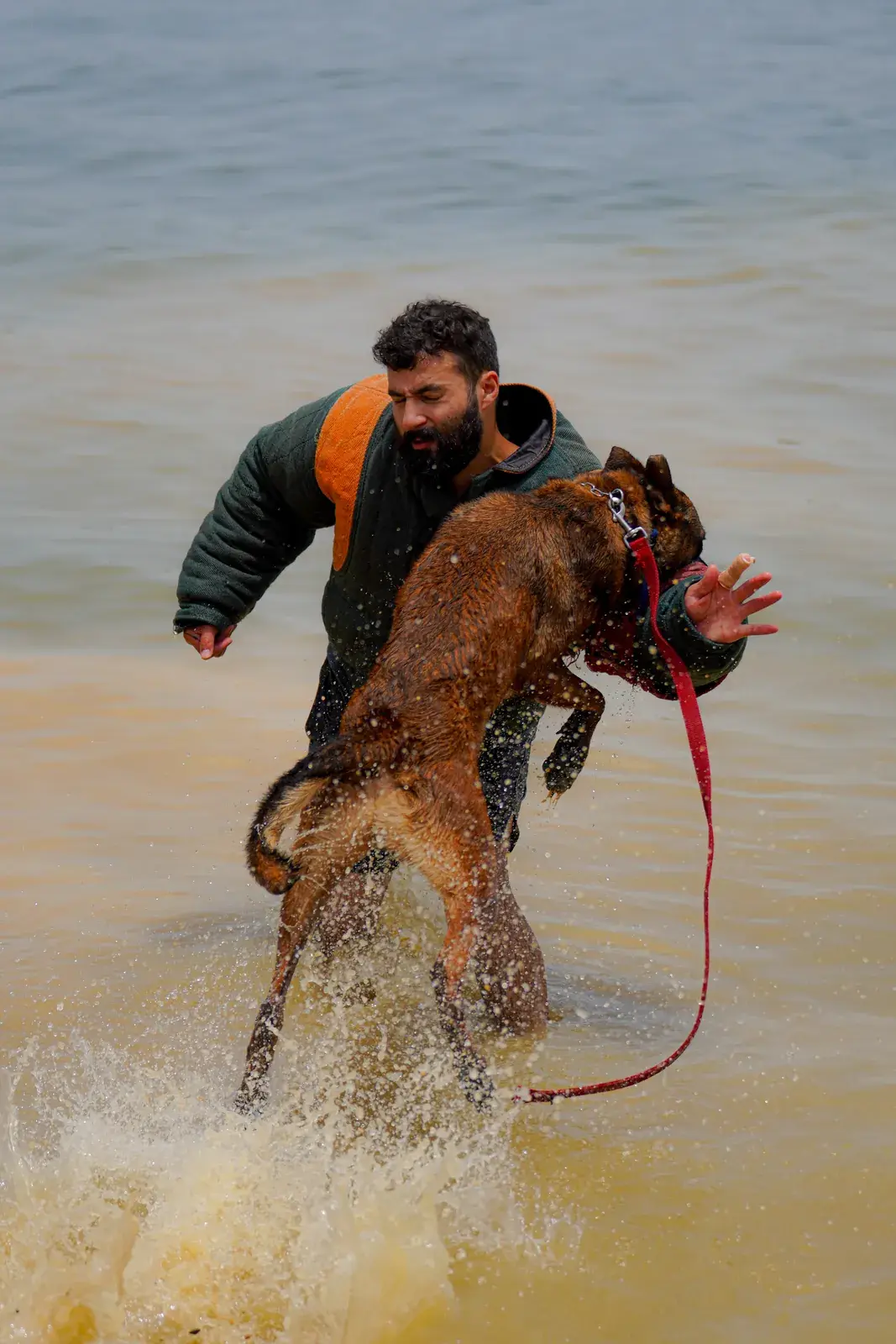
If you are looking for a trained Belgian Malinois, there are more sellers than there are dogs worth selling, and the vocabulary is built to make comparison hard. A “level two” dog is not a certified anything: no governing body defines those tiers, nobody administers a test for them, and there is no registry to check a dog against. Sanctioned venues publish results because they are judged in front of witnesses. A vendor level is not, because it is not.
So ask what a dog does rather than what it is called. Off-leash obedience with genuine distraction. Whether it releases on the first command, every time, while somebody is watching. How it behaves during the twenty-three hours a day when nothing is happening, which is the actual job. Ask who evaluated it and from what position — somebody who watched, or somebody who took the bite. Then ask what sort of home they would refuse to sell it to. A seller with no answer to that last one is moving inventory rather than placing dogs.
Then watch the right thing when you finally stand in front of the dog. Not how hard it hits — how quickly it comes back down afterwards. What a placement includes, how we deliver, and why there is no number printed on a page are covered under our programs and on the pricing page, which is blunt about it.