Protection Dog Scams And Red Flags
You are about to send a large amount of money to a stranger for an animal you cannot evaluate, in an industry with no licensing body, where the seller you are talking to will usually not put a number in front of you until you have committed. This is what to check first, written by two people who sell these dogs and can therefore tell you which warning signs are also somebody’s ordinary Tuesday.
The Warning Signs Of A Protection Dog Scam
The clearest warning signs of a protection dog scam are money demanded before you have watched the dog work, a wire transfer or crypto payment with no recourse, video that is not of your dog, and credentials nobody actually issues.
Outright fraud is the easy version to spot, and the FTC covers it well. The harder version is what this page is for. Most of the money lost here is not lost to fraud. It is lost inside transactions where nobody said anything false — the dog was real, the video was real, the deposit was disclosed — and the buyer still ended up with an animal that does not do what they thought they had bought, because the structure of a normal sale asks you to commit before you can evaluate. That structure follows from four facts: no governing body, no standard vocabulary, a price you usually cannot get until you have committed, and a buyer who is usually frightened.
So this page describes practices, not companies. The measure of a seller is never whether their process contains these features. It is what happens to it when you ask.
Deposit Structures That Should Stop You
Almost every bad outcome here is locked in the moment the first payment leaves, because that payment converts you from a buyer evaluating a purchase into an owner protecting a sunk cost.
Money Before The Dog Works
A deposit taken before you have watched the dog do anything is taken before you have any information. Paying to hold a slot in a queue is a business arrangement. Paying to hold a dog you have never seen move is a leap of faith with a receipt.
Non-Refundable, On A Dog Being Selected
A non-refundable deposit on a dog “being selected for you” means no animal is attached to your contract yet, and your money funds somebody’s sourcing trip with no obligation attached to the result. Ask what happens if you decline the dog they present, and get that answer in writing.
The Payment Method Is Chosen For You
The FTC states this one without qualification: “Only scammers say you must pay with gift cards, a payment app, cryptocurrency, or a wire transfer service like Western Union or MoneyGram since it’s hard to get your money back.” And: “Cryptocurrency payments don’t have the same legal protections as credit and debit cards do.” A seller may reasonably prefer a wire for a large balance. One who will take nothing else for the first payment has told you something.
The Number Moves After You Commit
The deposit clears and the arithmetic starts. Delivery was not included. The dog needs a few more weeks, at a rate. The one you were shown went elsewhere and the replacement sits a tier up. Each item may be defensible alone. The pattern is not, and it works because you have already paid.
Somebody Else Is Flying In Tomorrow
Scarcity is real and good dogs genuinely sell. What is diagnostic is whether the urgency survives a question: who is the other buyer, can you be second in line, is the deposit refundable if the dog goes. The FTC closes its alert on animal scams with the general version: “Don’t let scammers rush you into making a decision. Slow down and talk to someone you trust.”
No Written Terms Until The Money Lands
A contract sent after the deposit clears is a contract you did not negotiate. Ask for the full agreement, unsigned, before anything moves, and read the guarantee, the return clause and the support terms while you still have leverage.
Worth reading in the original: Getting a pet? Avoid scams and Wire transfer scams, which puts it as plainly as it can be put: “Wiring money is just like sending cash in the mail. Once it’s gone, you probably won’t get it back.” The line quoted above about being rushed closes the FTC’s alert on animal scams.
Video That Is Not Your Dog
Video begins nearly every one of these purchases and it is the weakest evidence in the transaction, because a clip can only show a moment somebody chose to keep, of an animal you cannot identify. The crude failure does happen — photographs get lifted and reused across vendor sites — and the FTC’s advice to pet buyers settles it in two minutes: “Do a reverse image search to see.”
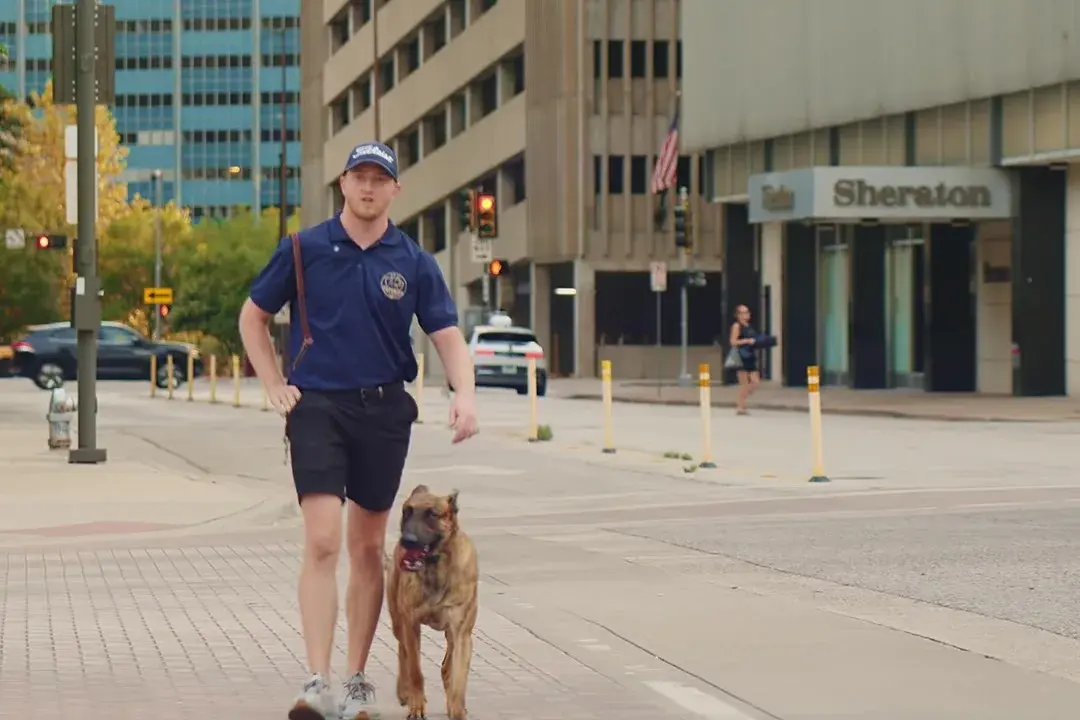
The far more common problem is footage that is genuine and simply not of your dog. A kennel’s promotional reel is legitimate; it shows the programme, the standard, the decoys. It just arrives in the same thread as a conversation about one particular animal, and nothing in the file names says which is which. Ask, by name, which dog is in each clip.
Then stop analysing video and do the thing that makes all of it moot. Get on a live call, ask them to hold up today’s date, and name an exercise you want performed in that moment. No recording answers a request made after it was filmed, which is why the FTC says legitimate sellers “will encourage an in-person or video meeting.” None of it replaces standing on the field, and our guide to reading a protection dog demo covers that.
- Reverse image search the stills and frames pulled from the videos.
- Search a distinctive phrase from the listing text. Copy travels between vendor sites alongside the media it describes.
- Ask which dog is in each clip, by name. Footage of the kennel’s programme is legitimate. The same footage presented as your dog is not.
- Time the cuts. If nothing runs past fifteen seconds, the edit is carrying the argument. Ask for one continuous unedited session.
- Compare ground, light and clothing across clips. Footage built from several dogs on several days changes surface, shadow direction and decoy kit inside one supposed session.
- Then get on a live call. Ask them to hold up today’s date, then name an exercise you want performed in that moment.
Titles Nobody Actually Issues
This is the richest ground for invention in the industry, because a credential is a word and words are free. Start with the shape of the claim rather than its content. A real credential has four parts: an organisation that issues it, a date, an event, and a record somewhere outside the seller’s own website. “Fully certified,” “master level,” an acronym you cannot resolve, an award with no awarding body — there is nothing underneath any of them.
Tier language is widespread enough that buyers assume it is standardised. It is not. No body defines level one, two and three, and one company’s level two is another’s level three. We describe what a dog will actually do instead, and set out what those descriptions mean so the words on our own site can be held to something.
“Police trained” and “military trained” do the most work for the least evidence, because no civilian certification sits behind either. At best they describe a training lineage. At worst they mean nothing, and the phrasing lets you fill in the difference yourself. One question separates them: which agency, which unit, which years, and will that agency confirm it. Now the useful half.
PSA
The Protection Sports Association runs sanctioned civilian trials in obedience and controlled protection, and publishes trial results, an events calendar and its list of decoys. Three things become checkable from outside: that the trial happened, that the dog was entered, and that the person claiming to have worked it is a listed decoy.
Mondioring
The United States Mondioring Association publishes trial results, a record search you can run against an individual dog, and the MR1, MR2 and MR3 titles those results feed. Reading that paper trail needs no cooperation from the seller.
IGP And KNPV
Trial systems, not labels: a title is earned on a date, at a trial, under a named judge, and written into the dog’s scorebook with the score attached. Ask for the scorebook page rather than the claim, then ask which club hosted the trial and contact the club. A real title survives that call.
AKC Registration
Registration records a litter rather than a dog — the sires, dams and litters are registered, and individual puppies from those litters are then eligible to be registered themselves. It is not an assessment of the animal, and on its own breeder classifieds page the AKC disclaims even that much: “The AKC makes no warranty or guarantee as to health, quality, parentage or value of dogs listed.” It is a floor, not a credential, and a seller presenting it as one is telling you what else they have.
How To Check A Title Yourself
Everybody tells buyers to verify credentials. Almost nobody writes down what verifying one involves. It is eight steps and an afternoon, and you can do all of it without the seller knowing.
- Write the claim down in the seller’s exact words. “Titled dog” is not a claim. “PSA1, earned at a named club on a named date” is.
- Name the issuing organisation, then find its own site rather than a page about it. If nobody can name an organisation that issues the credential, it does not exist.
- Look for published results there — a calendar, a results archive, a record search. PSA and the US Mondioring association both publish theirs.
- Match three fields, never one: the dog’s registered name, the date, and the club or trial. A call name is worth nothing, because records use registered names.
- Where there is no searchable archive, contact the club that hosted the trial. Clubs are run by people who compete, and they answer email about their own events.
- Ask for the scorebook or certificate as an image, and check the name on it against the registration papers on the dog you are being offered.
- For police or military claims, ask which agency, which unit, which years, and whether that agency will confirm it.
- Treat any acronym you cannot resolve to an organisation as decoration. An award has an awarding body, a date, and other people who also received it.
Now run it on us, because that is the point of the method. Our claim is that both owners are listed decoys at PSA-sanctioned trials — the decoy being the person in the suit who takes the bite. Here is that claim in the form the steps above ask for.
- Arkhein PSA — Snyder, Texas, September 26–27, 2026. Listed decoys: Sufian Rahim and David Parrish.
- Lost Creek Working Dog Club — Benton, Arkansas, October 9–11, 2026. Listed decoy: Sufian Rahim.
- Canis Fortis Sport Club — Lometa, Texas, April 25–26, 2026. Listed decoy: David Parrish.
Organisation, club, place, date. Take those to PSA and check them against the published calendar and results rather than taking our word for it. The fuller version is on our story.
Refusing An Unfamiliar Decoy Is The Answer
If you make one request during the entire purchase, make it this: ask to see the dog worked by a decoy it has never met, and ask before any money moves. Why that single change reveals more than the rest of a demo put together, and what a fair modified answer sounds like, is worked through in our guide to reading a protection dog demo. What belongs here is the timing: a refusal you receive after paying is information you can no longer act on, and a refusal rarely arrives as a refusal — it arrives as a reason, so what you are listening for is whether that reason resolves into an alternative or into nothing.
The Records That Should Already Exist
At the money involved in a finished dog, documentation is not a favour. Every item below either exists or does not, and the honest answer to “does it exist” is never a description of the dog.
Hips And Elbows
OFA grades hips in seven categories — “Excellent, Good, Fair (all within Normal limits), Borderline, and then Mild, Moderate, or Severe” — and a final evaluation is a different document from the preliminary screening available between four and 23 months. PennHIP measures something else: passive hip joint laxity, from 16 weeks, scored against other dogs of the same breed and read by veterinarians certified in the method. Either is meaningful. “Hips are great” is not.
Why A Missing Record Is Not Neutral
The detail that changes how you read a gap. Normal OFA hip grades are published — they sit in the public domain. Bad ones do not, unless the owner opts in. In OFA’s own words: “Unless the owner has chosen the open database, dysplastic hip grades are closed to public information.” So an absent record has two meanings: never tested, or tested and kept private. Ask which, and ask for the report rather than the grade.
Cardiac, Eyes And The Rest
Which screens matter varies by breed and by what the dog is for. What should not vary is the form of the answer: a named test, by a named veterinarian, on a named date, with a document you can hold.
A Pedigree You Can Verify
Registered names and numbers that resolve in a registry, not a hand-typed family tree in a PDF. Then read it for what it tells you, which is ancestry — not temperament, not nerve, not suitability for your house. Titles in a pedigree belong to other dogs.
Both schemes publish their methodology: OFA on hip dysplasia and the PennHIP FAQ. Which screens matter varies with the breed — the structural risks are not identical for a Belgian Malinois, a Dutch Shepherd and a German Shepherd.
What A Real Agreement Actually Says
Read the contract as the honest description of the deal, because it is the only part of the transaction that survives the enthusiasm.
The Health Guarantee, Read Rather Than Mentioned
A guarantee is only as good as its four boundaries: what it covers, for how long, what it pays, and what you must do to keep it valid. Many require a veterinary examination within days of arrival and quietly void if you miss it. Many pay in replacement rather than refund, which matters enormously if the point was this dog in this family.
The Return And Rehome Clause
What happens if the placement does not work? A serious seller has an answer, because they do not want their dog in a house that cannot run it. Look for whether the dog can come back, on what timeline and on what terms — and for the obligation running the other way. A clause requiring you to return the dog rather than rehome it privately is a good sign about who they are.
What “Lifetime Support” Means In Writing
Almost everyone offers it, so read it as a term rather than a sentiment. “Call any time and we will talk it through” is cheap to give. “We will come back out and work the dog” is a different promise with a cost attached, and it should say who travels, how often, and who pays.
Training Terms And What Is Excluded
The agreement should name what training the dog arrives with, what instruction you get on delivery, and what is billed separately afterwards. Food, vet care, insurance, equipment, boarding and refresher work sit outside the purchase almost everywhere. A contract that never says so is not being generous. It is being quiet.
One more clause, whose absence is informative: what happens if the dog fails a health screen or a temperament assessment after arrival. A seller who has thought about that has thought about the placement failing. Our own split between what is included and what is not is written out in the FAQ rather than left for the contract to reveal.
Bought Overseas, Resold Six Weeks Later
A large share of the working dogs in this country arrive from Europe, and the breeding programmes there are why these dogs exist at all. Importing is not the problem. A particular sequence is: a dog is bought overseas, often on video, sometimes sight unseen, by a US buyer who has never handled it. Weeks later it is listed at a considerably higher number and photographed on a nice lawn. Somewhere in that chain there was supposed to be an evaluation — somebody who put hands on the dog, worked it, and formed an opinion not inherited from the seller they bought it from. Frequently there was not one.
So the description you are reading has been copied forward twice without anyone re-checking it, and the two things most likely to be wrong are the two things paperwork cannot carry: how the dog handles pressure from an unfamiliar person, and how it behaves when nothing is happening. Ask the sequence questions plainly. Where did this dog come from? When did it arrive? Who has worked it since, how often, and where? A seller who developed the dog answers at length. One passing a dog through answers in adjectives. What should sit behind a finished dog is set out on our fully trained dogs page.
Both Ends Of The Price Range Are A Tell
A price far below the market band is the easier read. Serious dogs are expensive for an unglamorous reason: months of daily work, plus every candidate that was evaluated, rejected, and still had to be fed and vetted meanwhile. At a fraction of the market rate, the money comes out of something — usually the selection, meaning nobody turned the dog down, or the finishing, which is the part you cannot see in a fifteen-second clip.
The other extreme is subtler. A very large headline number with no date attached is frequently not a price at all. It is a figure recycled from press coverage of one unusual sale, repeated until it reads as the going rate. That is checkable: the same single sale gets cited by three outlets across twelve years, and all three appear with their quotes and links on our pricing page, alongside published tier ladders, ownership costs, insurance exclusions and the Texas liability floor. What that page does not carry is our own price, because a number with no dog attached to it is not information.
Underneath all of it sits the prior question. Most people who contact us should not buy a protection dog, and we wrote a whole guide arguing them out of it. The cheapest way to avoid being taken by anybody here is to want the thing they sell a little less than you did when you started reading.
Nine Questions For The First Call
Ask them in this order. None is aggressive, all are normal for a purchase this size, and what each is really testing is written underneath it.
- Can I see this specific dog work, in person, before any money moves? A yes is the baseline and a no ends it. “Yes, after the deposit” is a business model, and you should know that is what you are agreeing to.
- Will you work it with a decoy the dog has never met? The most informative request you can make. A modified yes is fair. “There is nobody else” is not a modification.
- Which of your videos is this dog, and can I have one unedited session? Establishes which footage is even about your purchase, and whether the library survives being seen uncut.
- What title does this dog hold, from which organisation, earned on what date? Names, dates and an issuing body are checkable. A tier number is not, because no organisation issues one.
- What are the hip and elbow results, and can I see the reports? A missing result has two meanings and only one is “never tested.” The report distinguishes them.
- Can you send the full contract, unsigned, today? The fastest test on the list. It costs the seller nothing and takes the deposit conversation out of the dark.
- What forms of payment do you take, and is the deposit refundable until when? You are listening for an instrument with recourse, and for a refund condition stated as a date.
- Where did this dog come from, when did it arrive, and who has worked it since? Separates a dog somebody developed from a dog that was bought and re-listed.
- What kind of home would you refuse to sell this dog to? A seller who has never turned anyone down is not selecting placements. They are moving inventory, and eventually you are the inventory.
If a seller becomes irritated by this list, that is your answer and it cost one phone call to get. Anyone selling a good dog has been asked all of it before.
Everything Cited On This Page
Each was read on the page it is cited to. Everything else here is our own reasoning, and you should weigh it knowing we sell these dogs.
- FTC — Get the dog or cat instead of the scam — Reverse image search, live meetings, payment methods.
- FTC — Getting a pet? Avoid scams — The payment-method rule, stated plainly.
- FTC — Animal lovers: learn to spot and avoid this breed of pet scams — Closes on the instruction not to be rushed into a decision.
- FTC — Wire transfer scams — Why a wire is a hand-off rather than a payment.
- FTC — What to do if you were scammed — Which payment methods carry legal protection.
- OFA — Hip dysplasia — The seven grades, and which the public database omits.
- PennHIP — Frequently asked questions — What laxity screening measures, and from what age.
- Protection Sports Association — Published trial results, event calendar, decoy list.
- United States Mondioring Association — Trial results and a record search for one dog.
- American Kennel Club — Breeder classifieds FAQ — The AKC, in its own words, on what registration is not.
Last checked 8 September 2026. If one of these has moved or changed, tell us and we will correct it.
When We Publish Something Worth Reading
No sequence, no drip, nothing automated. One email when we have written something a buyer would actually use — which is a handful of times a year, not a handful of times a month. Leave and we stop.
Run This List On Us First
Take every question on this page to whoever you are buying from, and start with us. We would rather answer nine uncomfortable questions on a first call than have somebody spend this kind of money on trust alone — including trust in us. If the answers send you somewhere else, that is a working process rather than a lost sale.